From lobby ads to in-room concierge
At first, we just wanted to put advertising in hotel lobbies: an ad for a shop or restaurant, so guests could see options nearby.
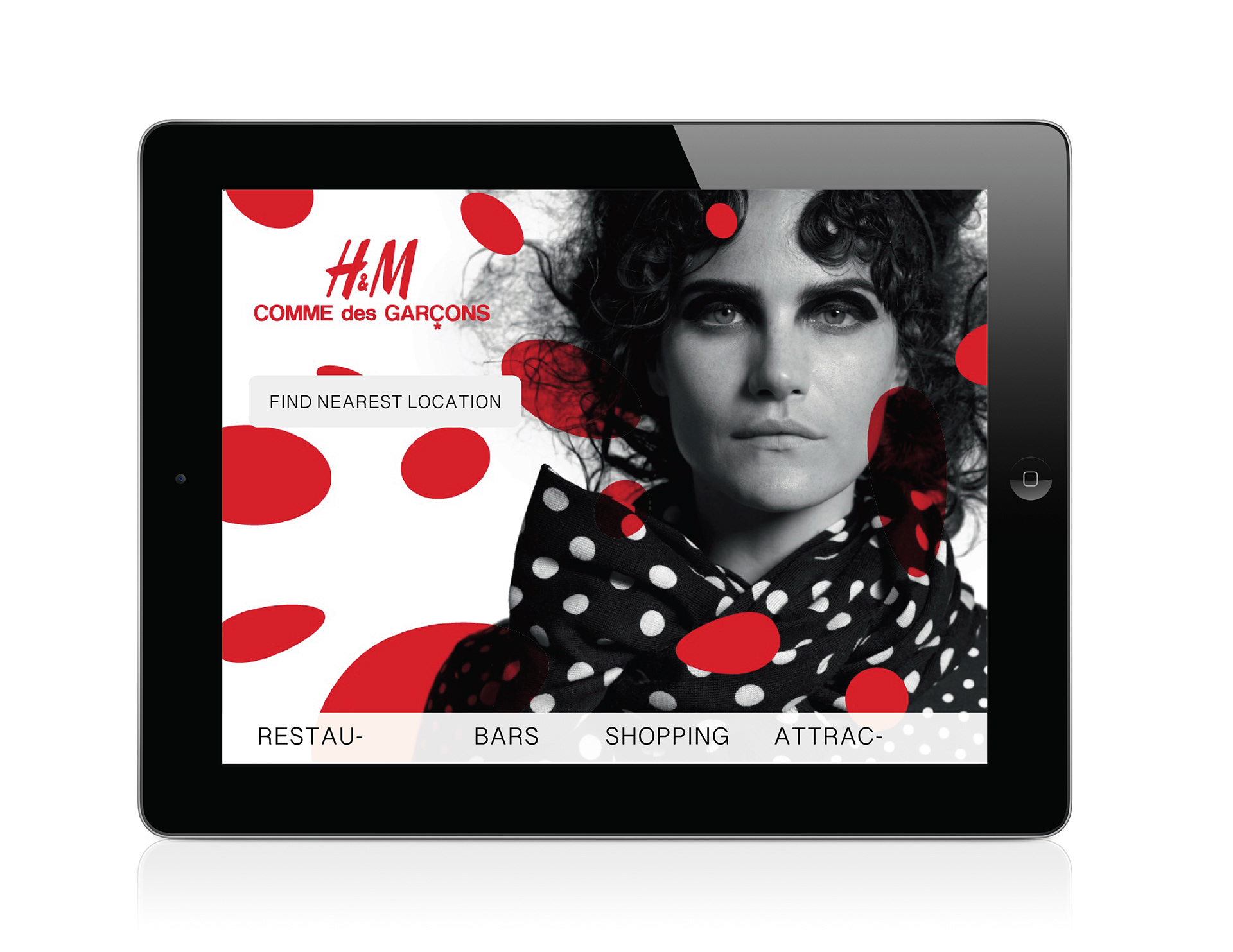
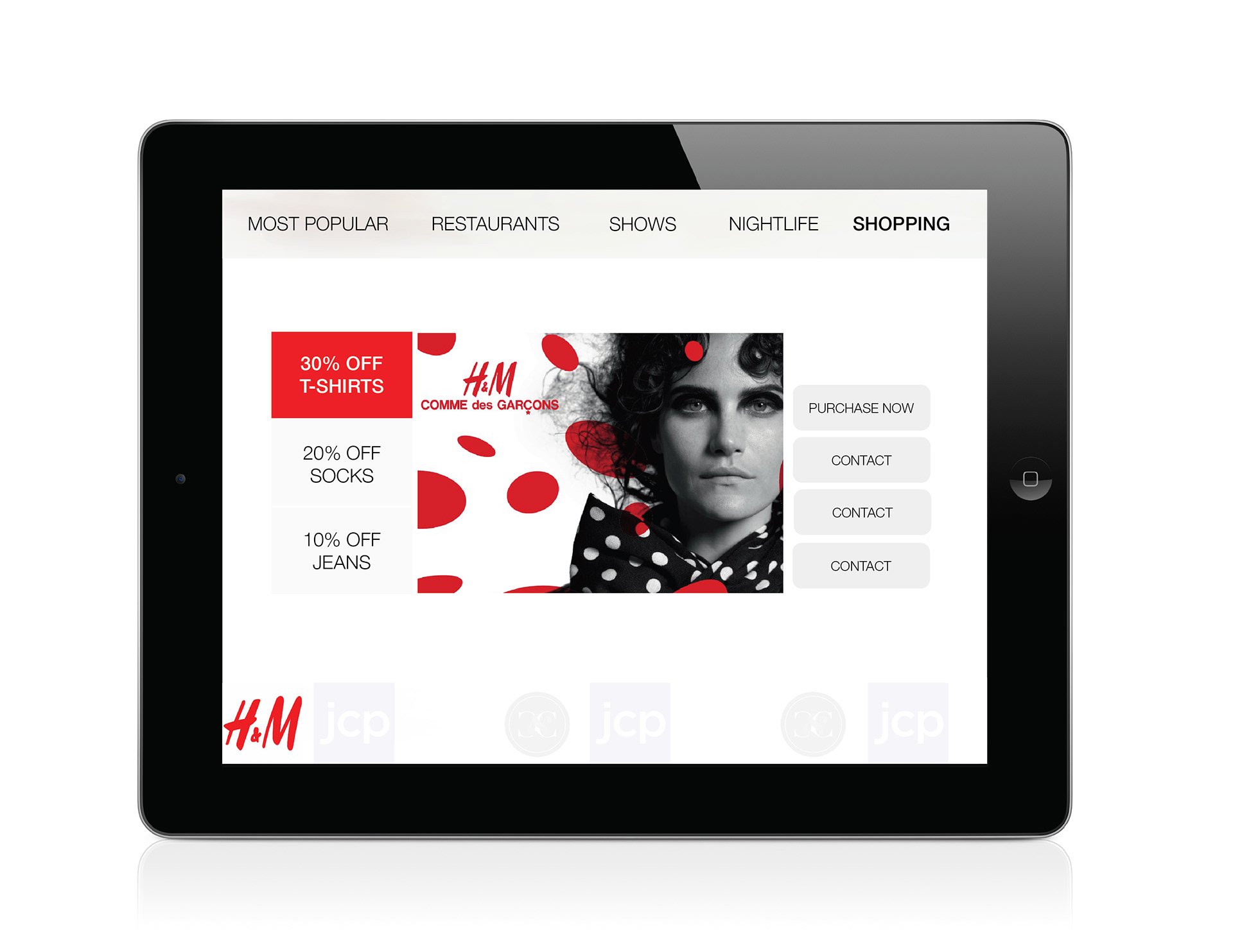
Then we asked a simple question: why not put these in the rooms?
From there, we set out to build a custom experience for each guest: what they could do today, tomorrow and throughout the week.
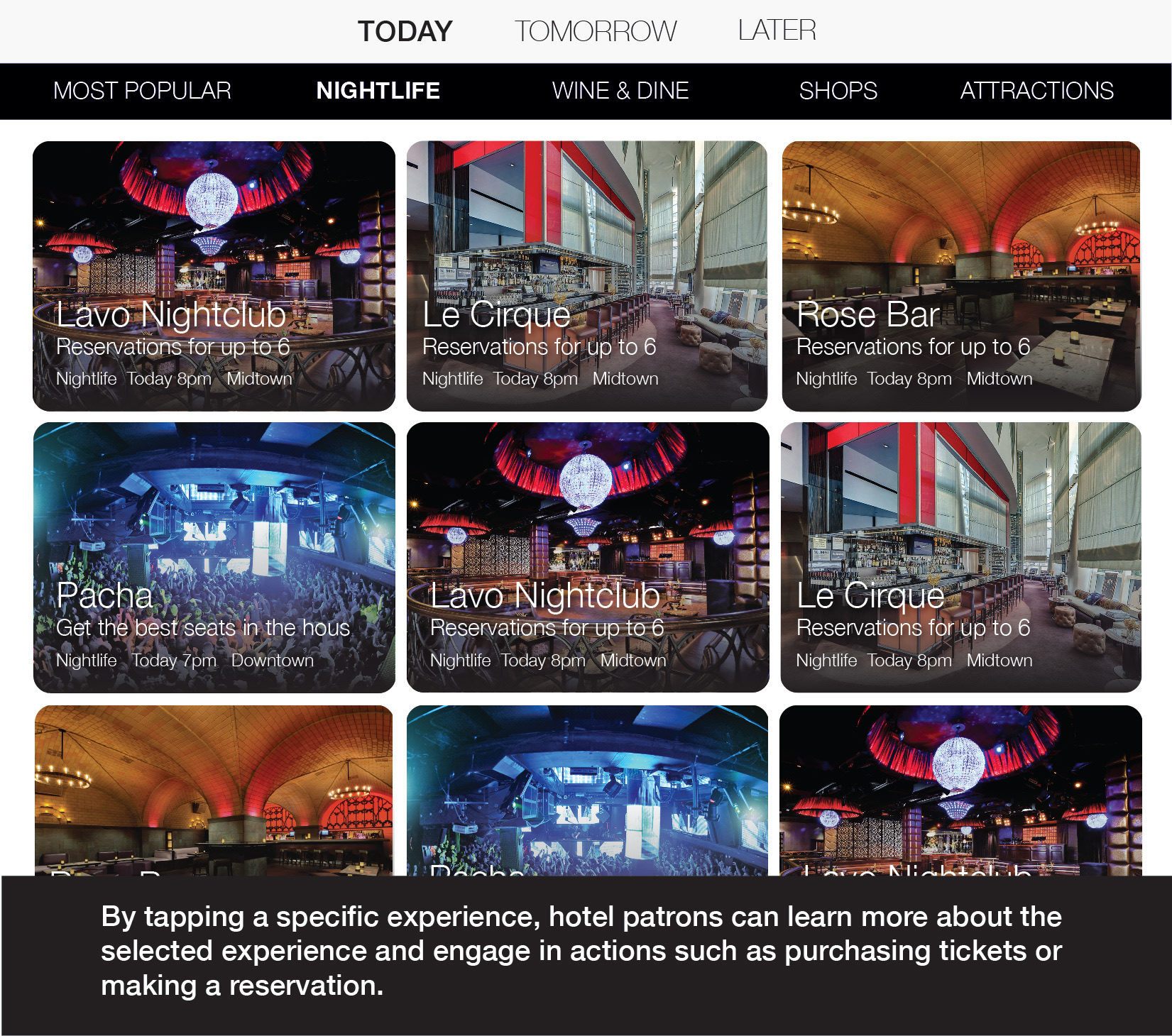
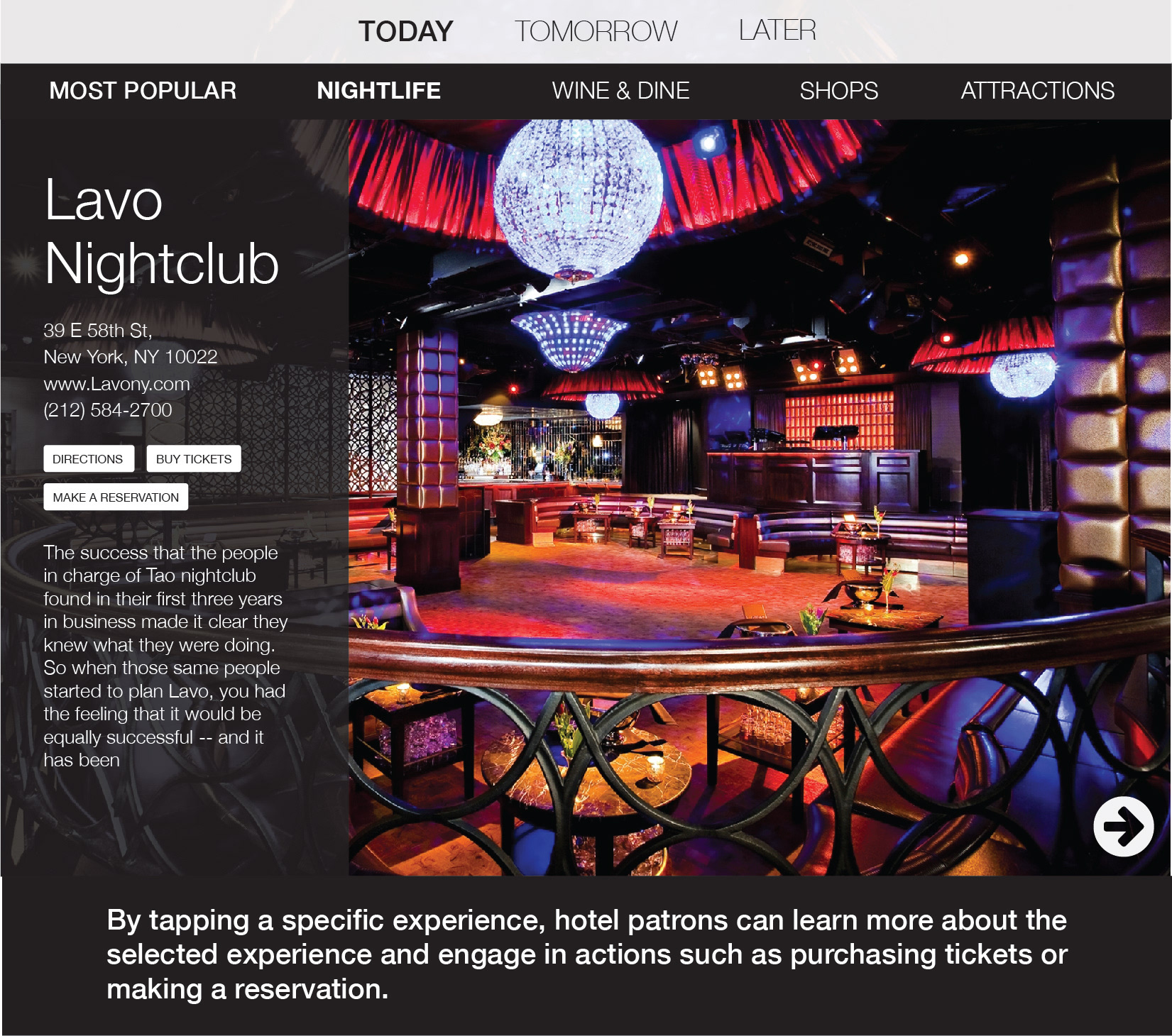
We started by simply putting iPads in rooms. Theft turned out to be a risk, and we wanted the screen standing up so guests would notice it. So we had a custom case made, with a locking charger.
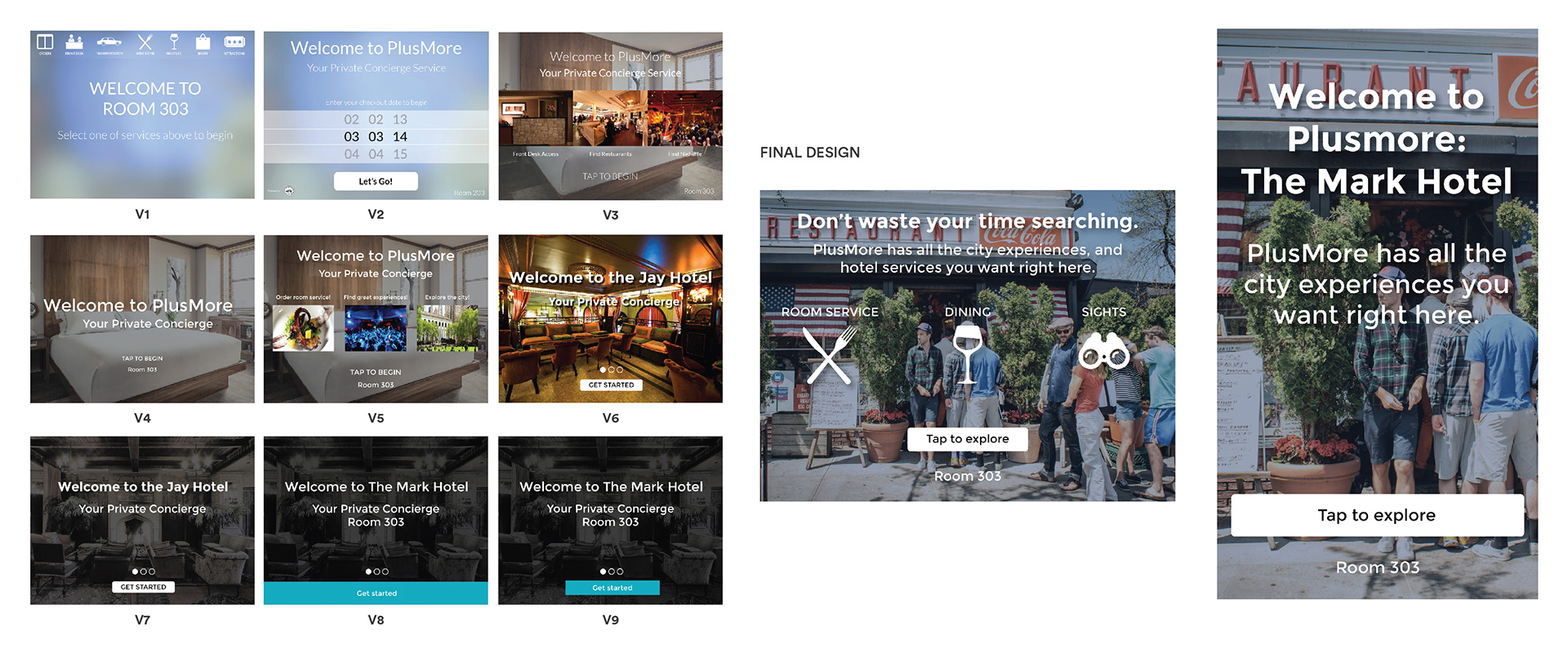
Iterating the guest experience
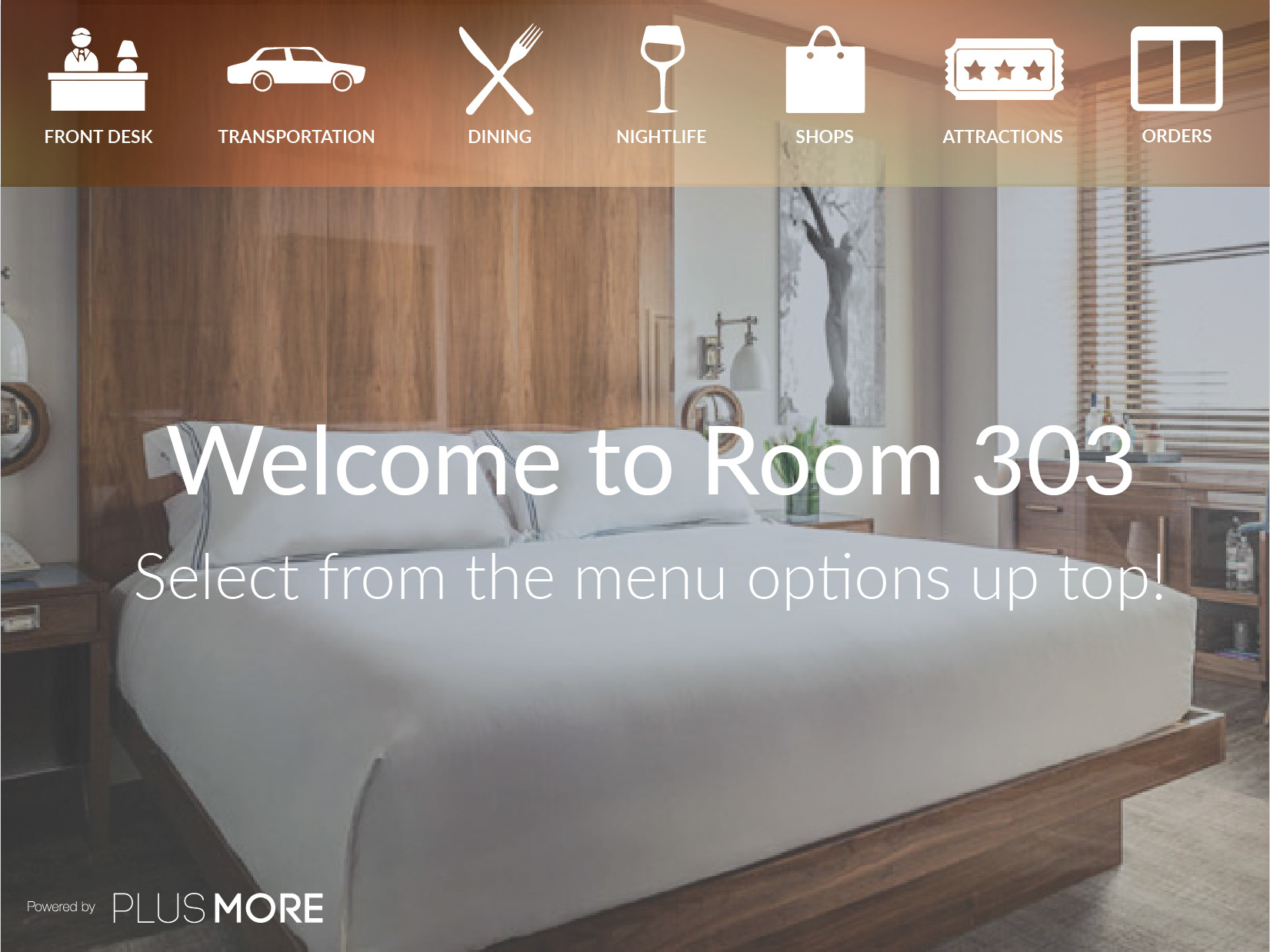
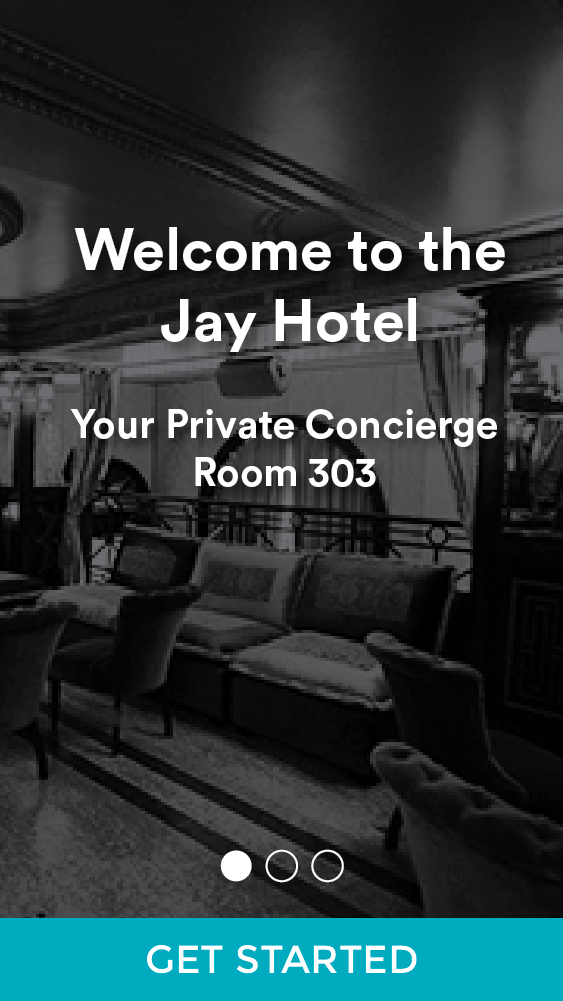
I put "Welcome to room 303" right on the screen to make it personal, and gave pages large icons. The blue background here was later removed.
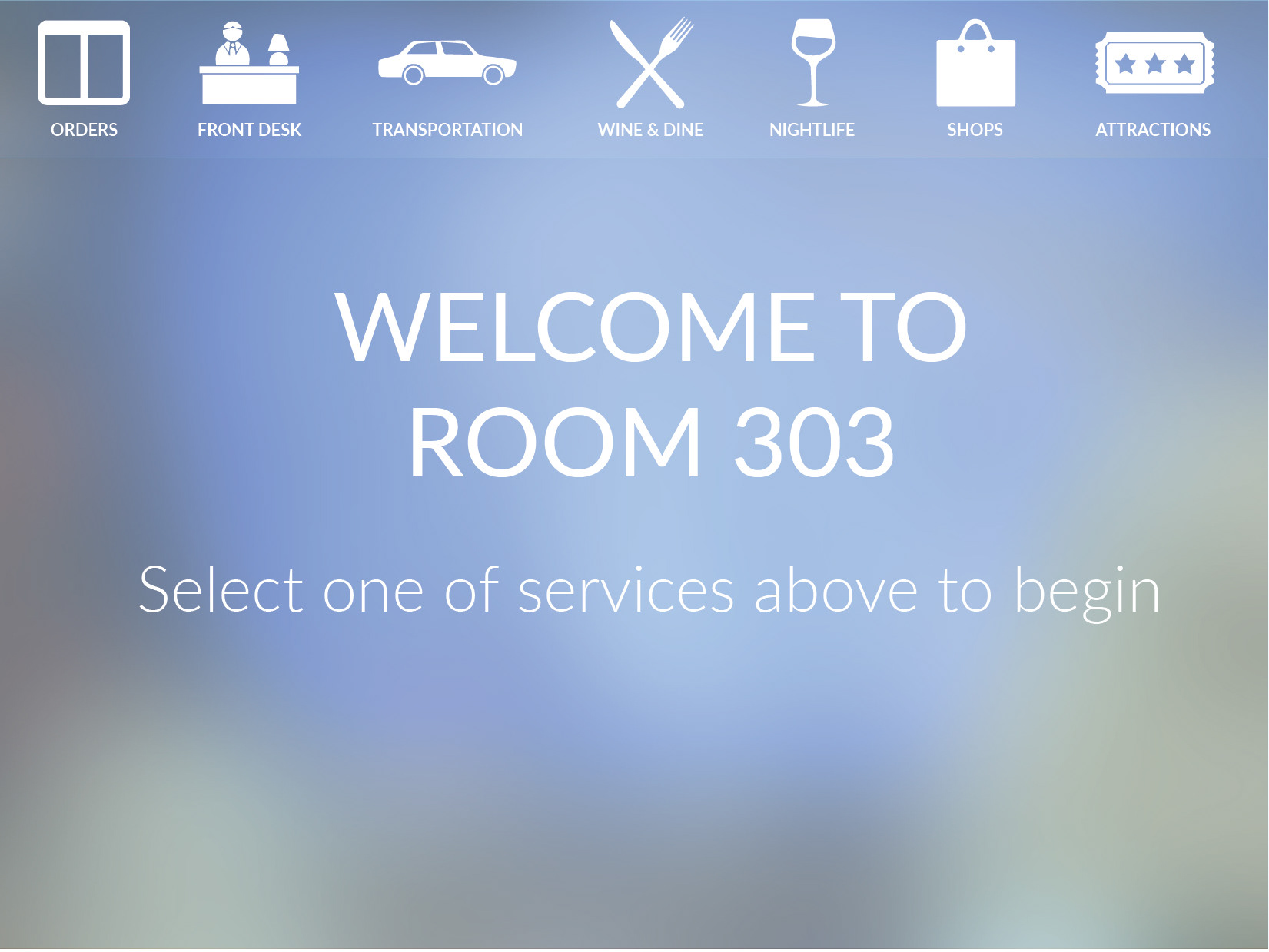
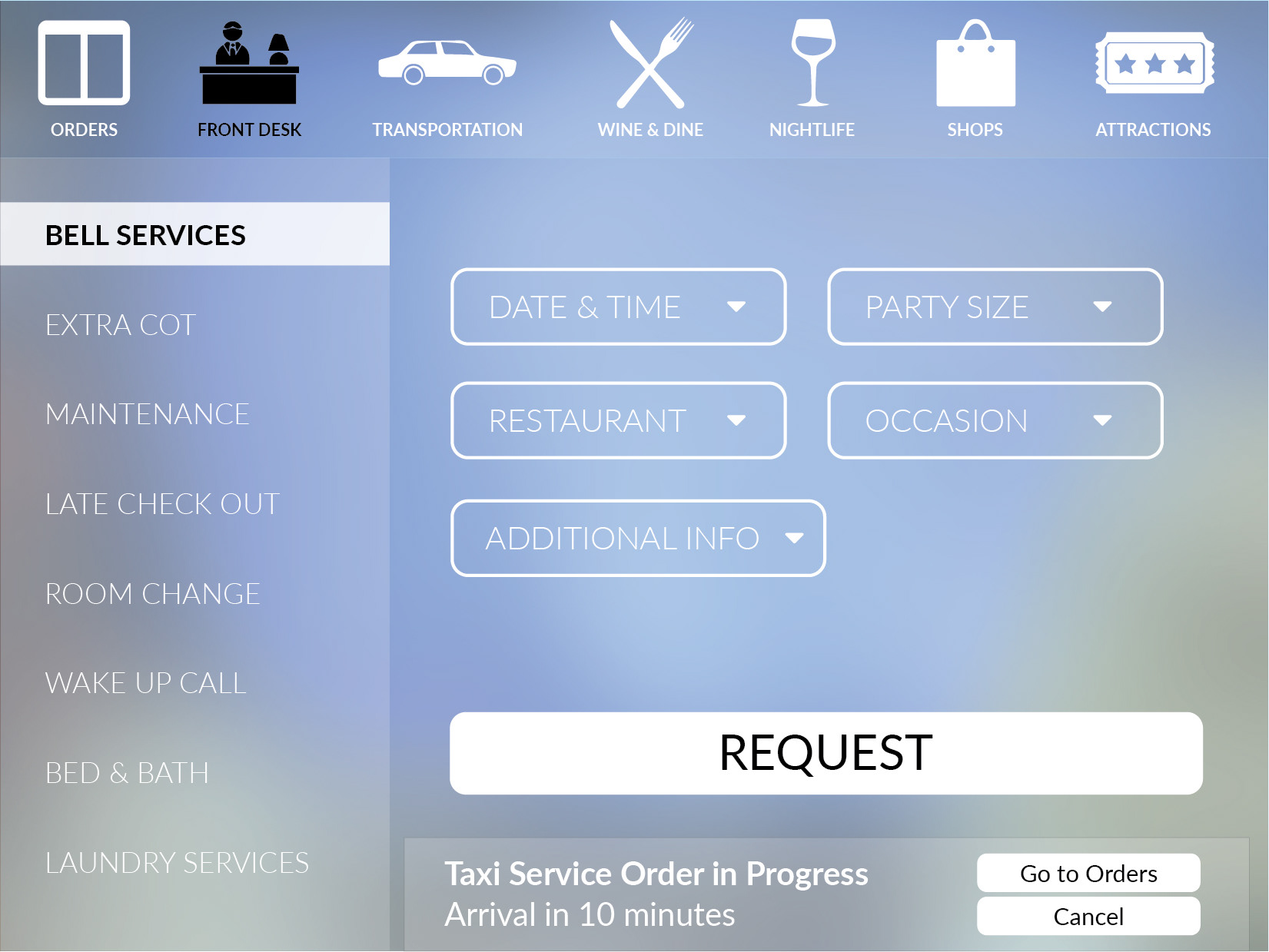
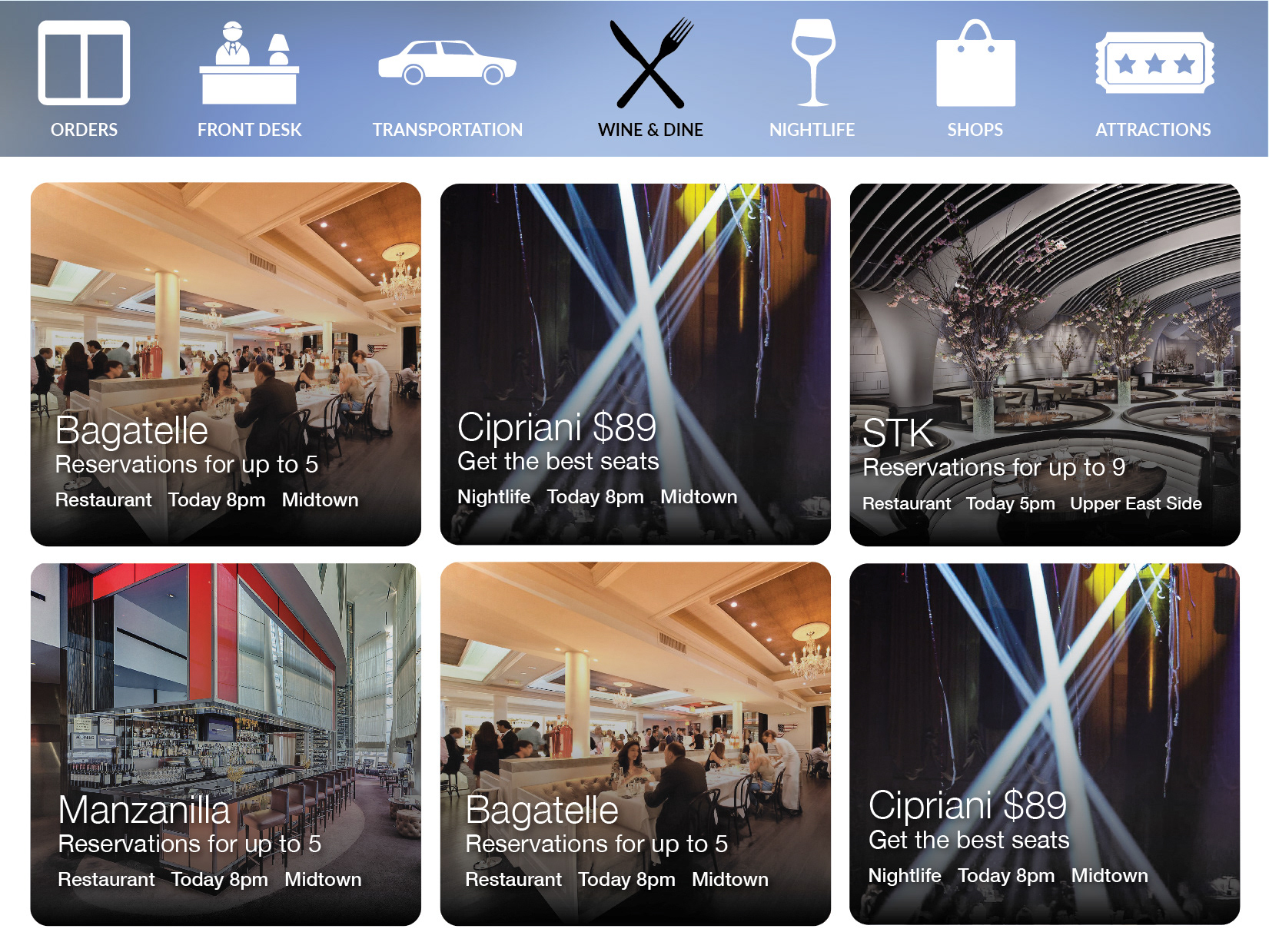
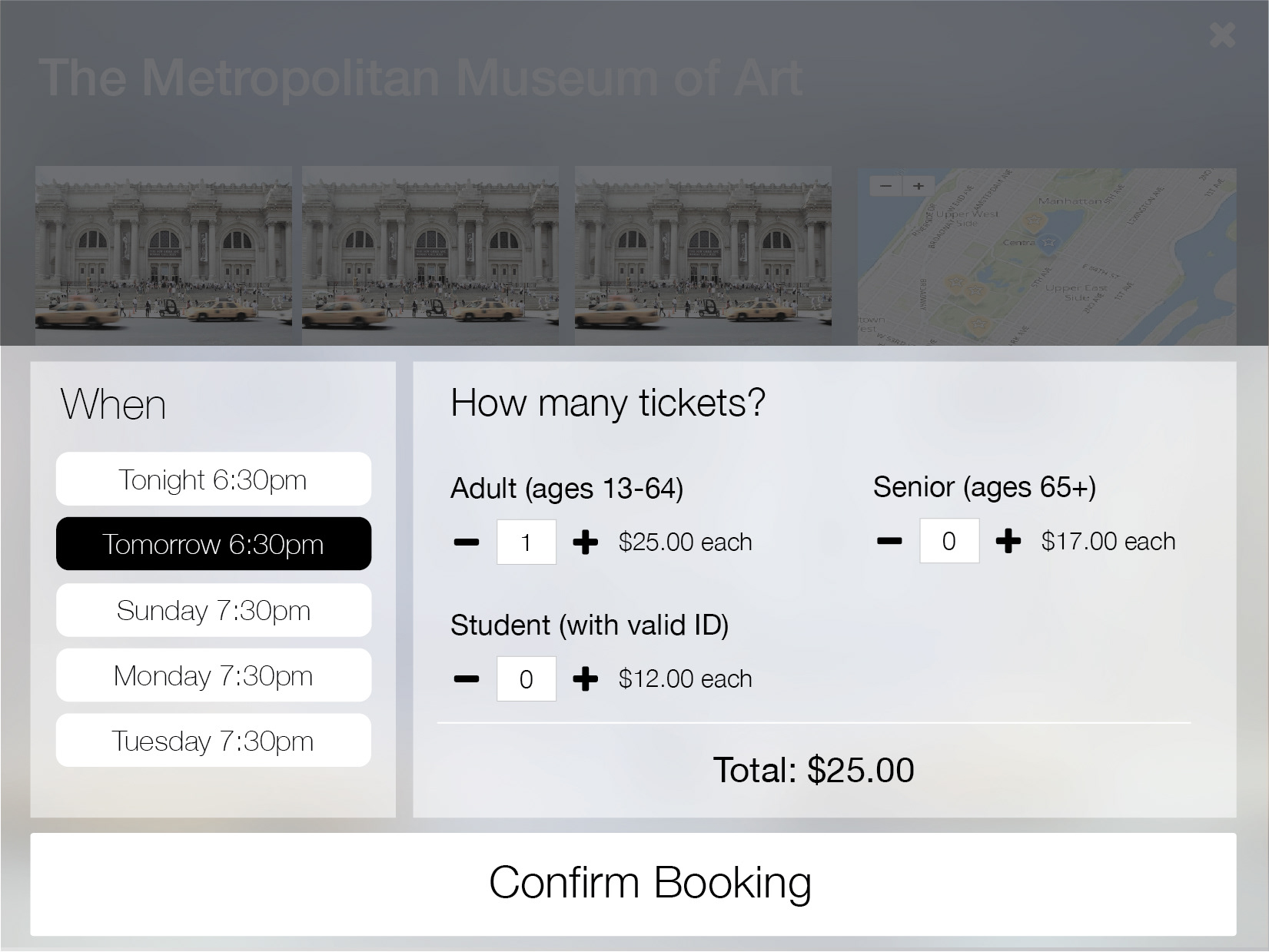
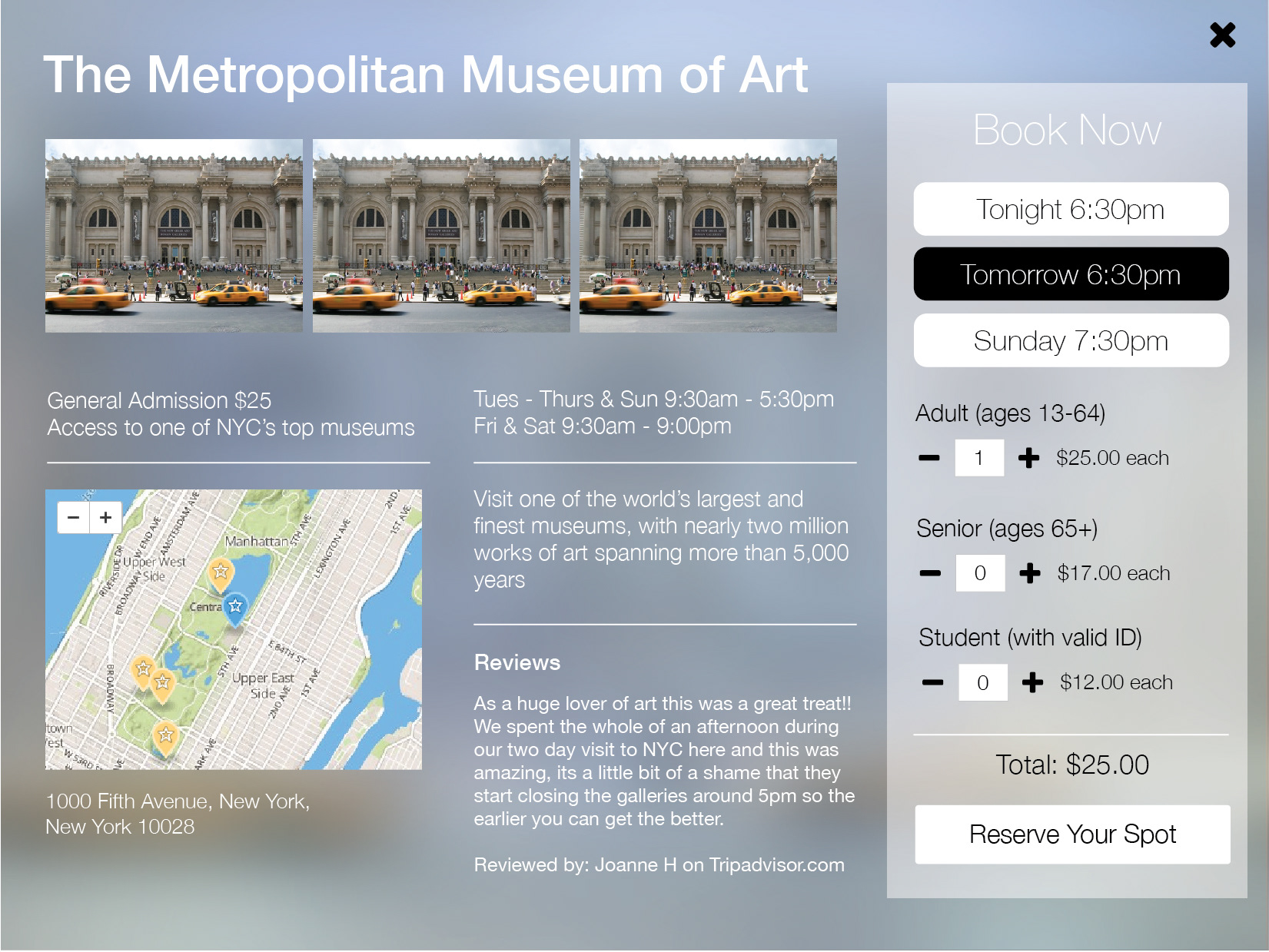
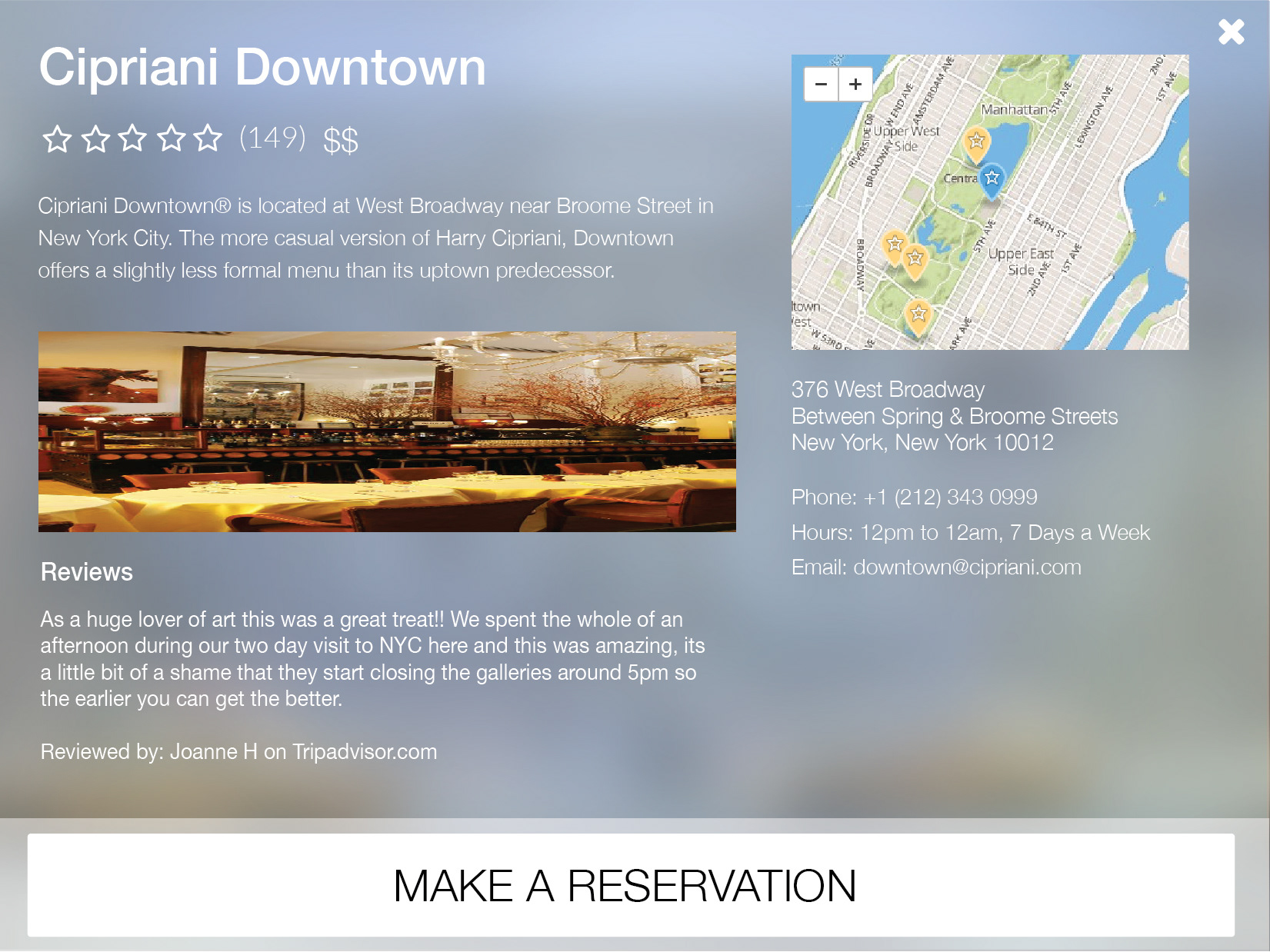
Next I tried multiple colors for the top navigation, moving toward a more "naked" direction. I always try to let the content be the main attraction.
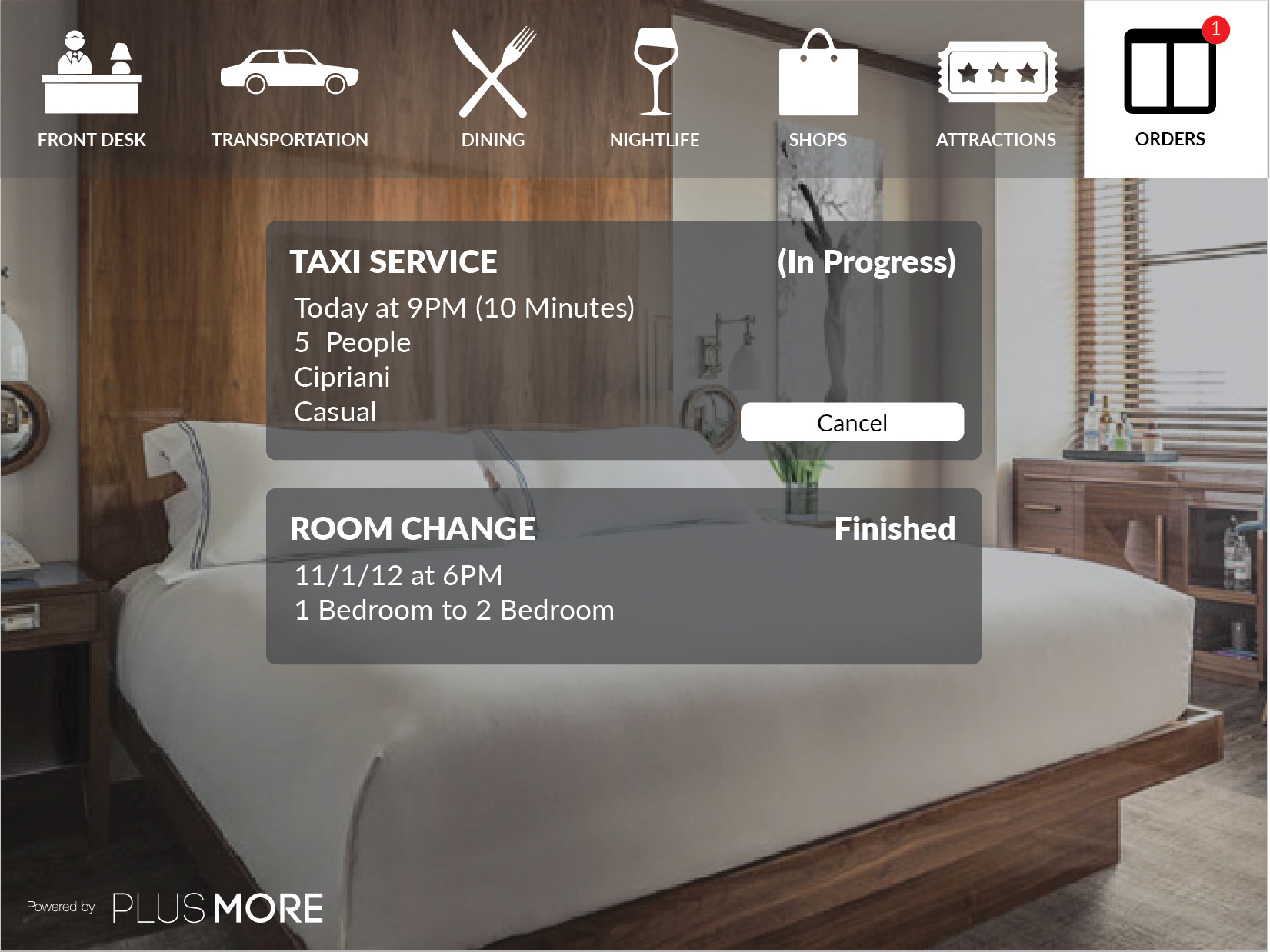
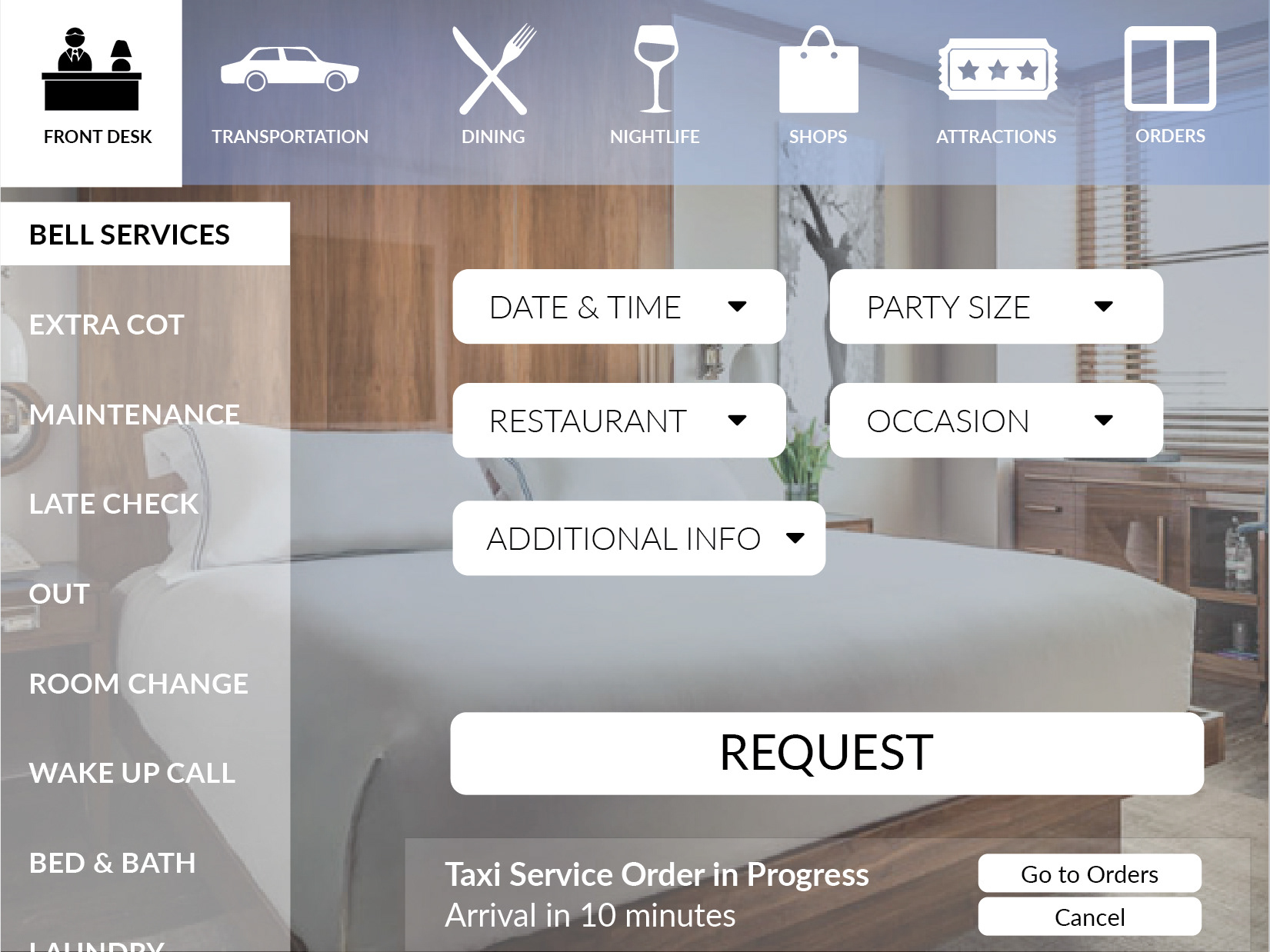
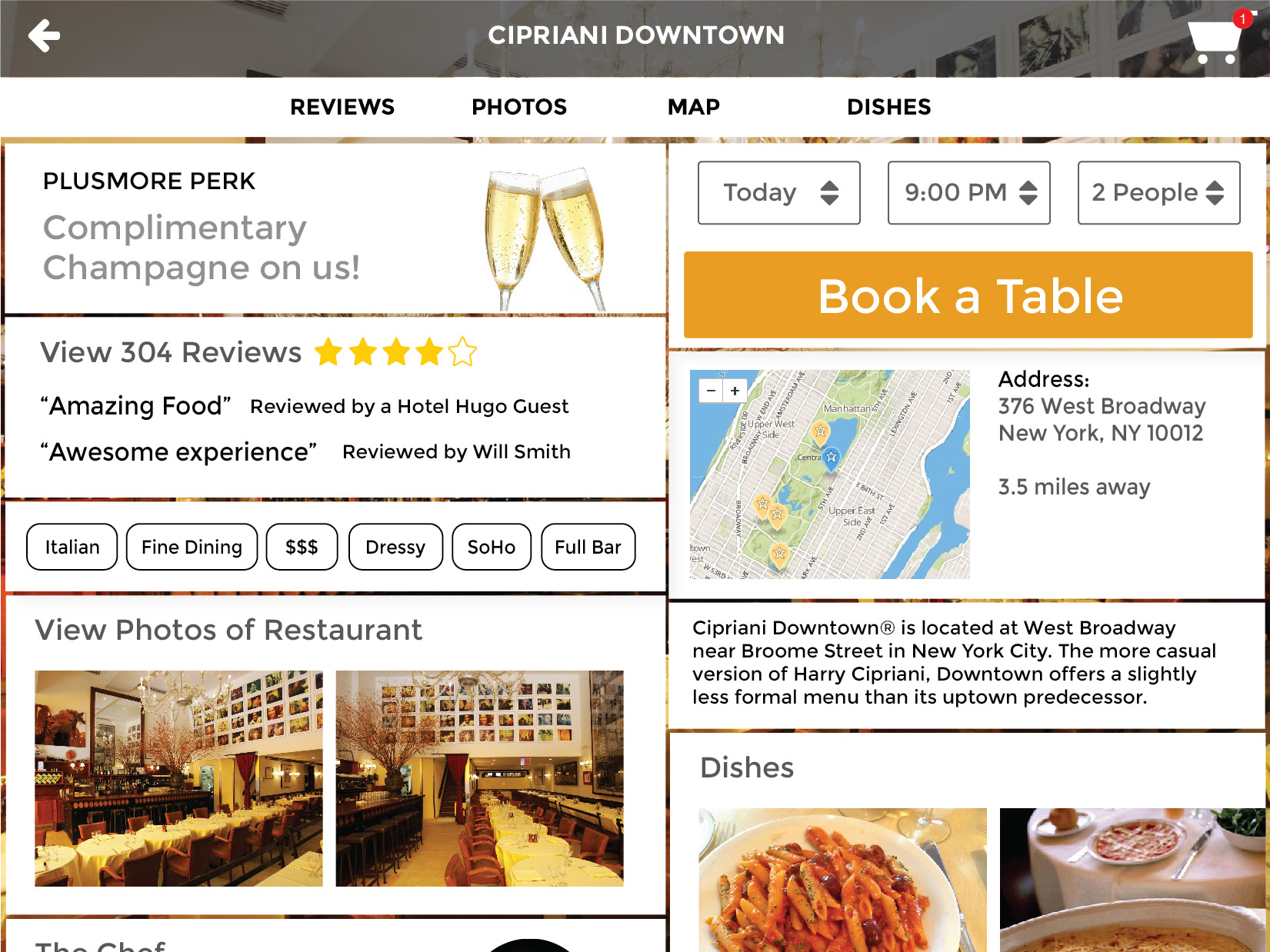
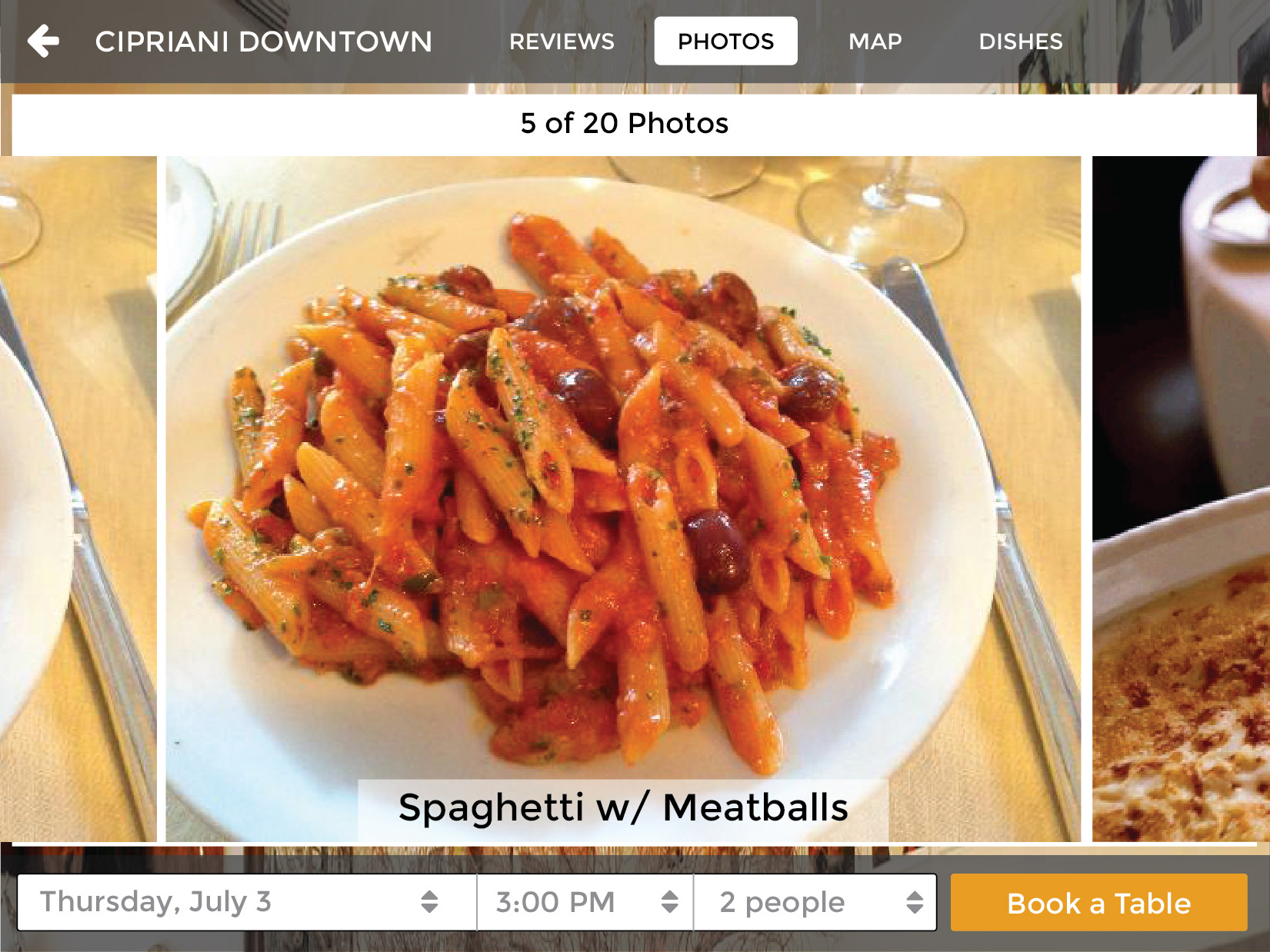
I removed the blue entirely and added a boxed design, so a restaurant page shows PlusMore perks, reviews and the address together.
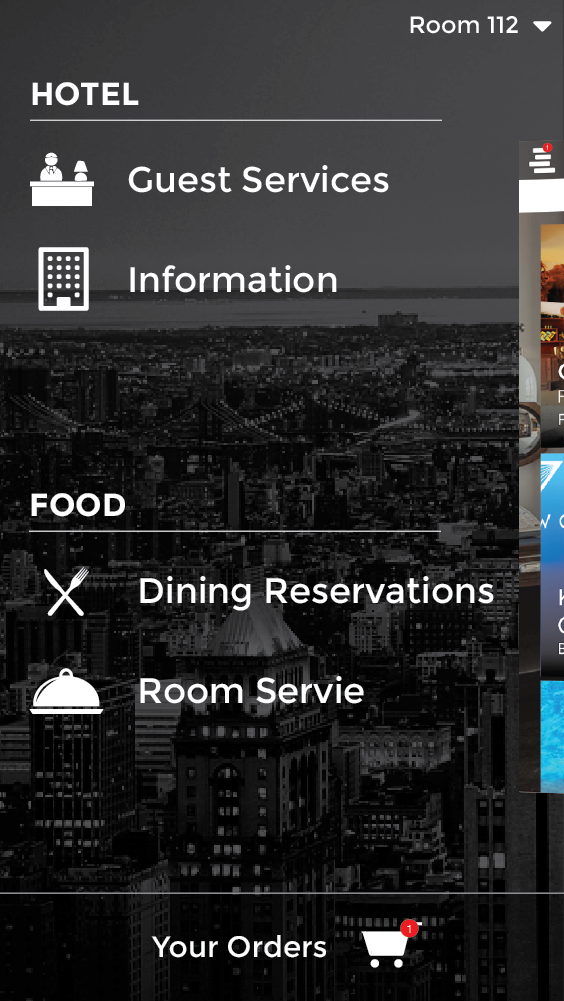
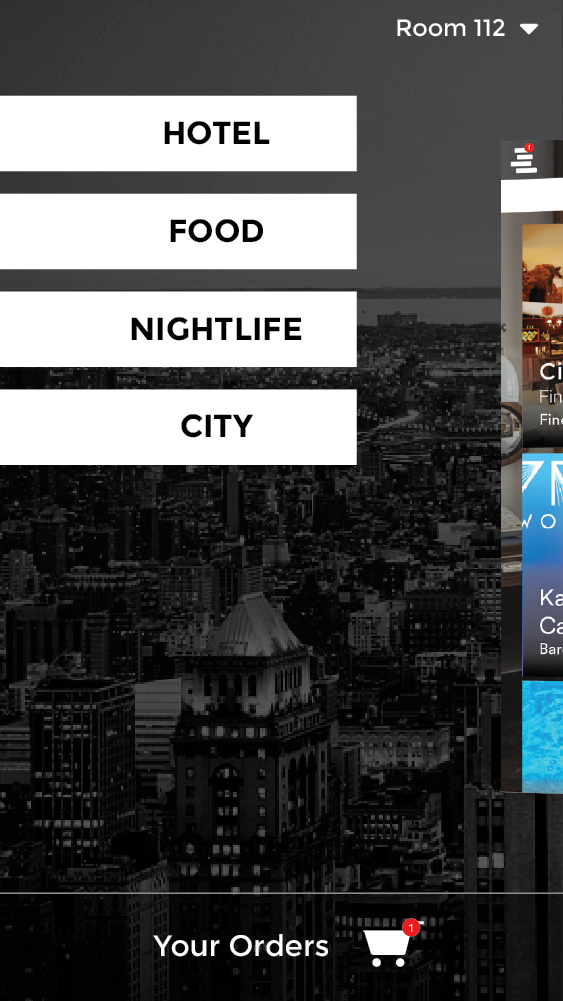
Then I asked: what if guests could filter right in the top nav? I wireframed and mocked it up, added a map/list toggle, and used the PlusMore logo as the menu icon to reinforce the brand.
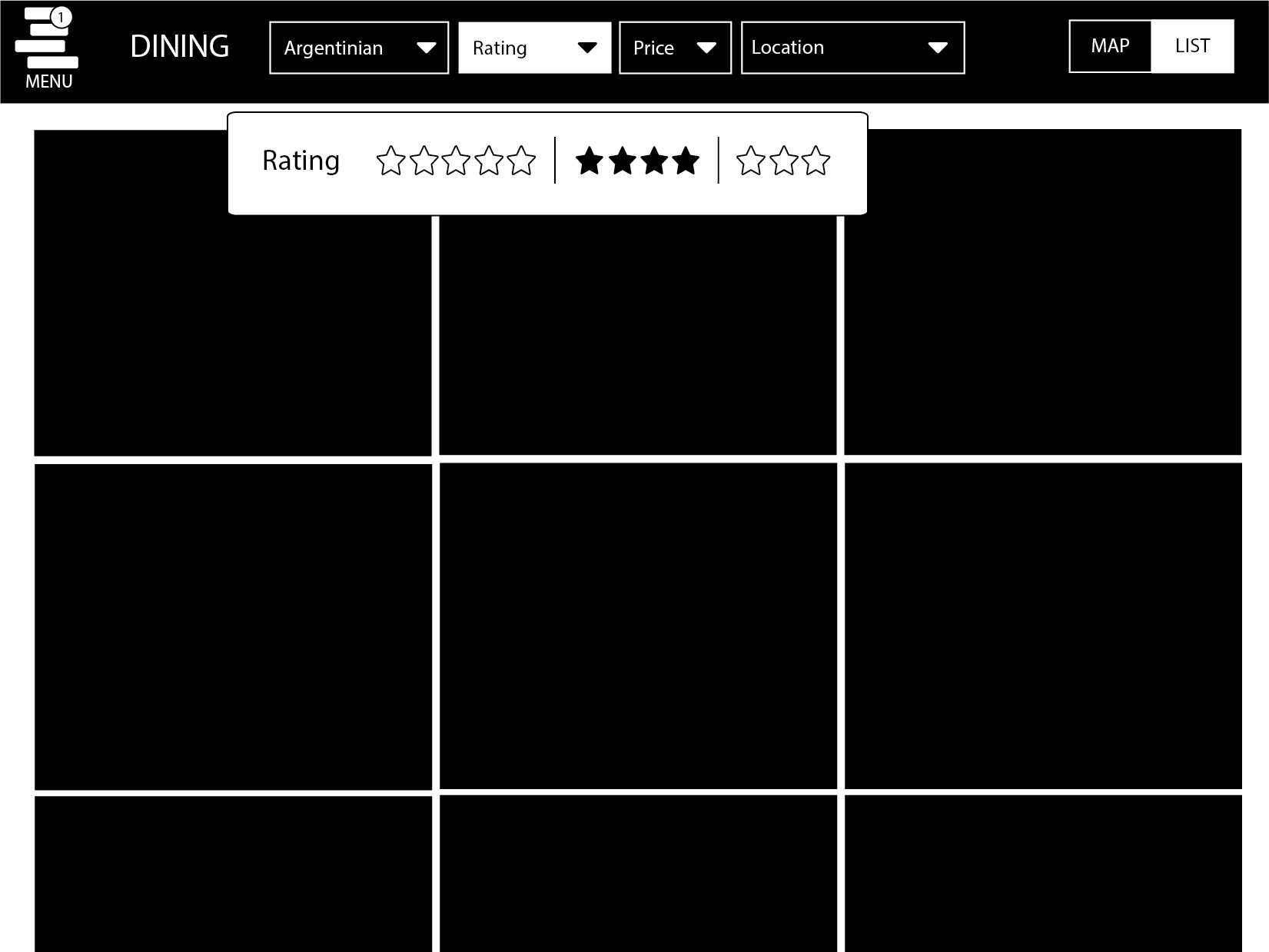
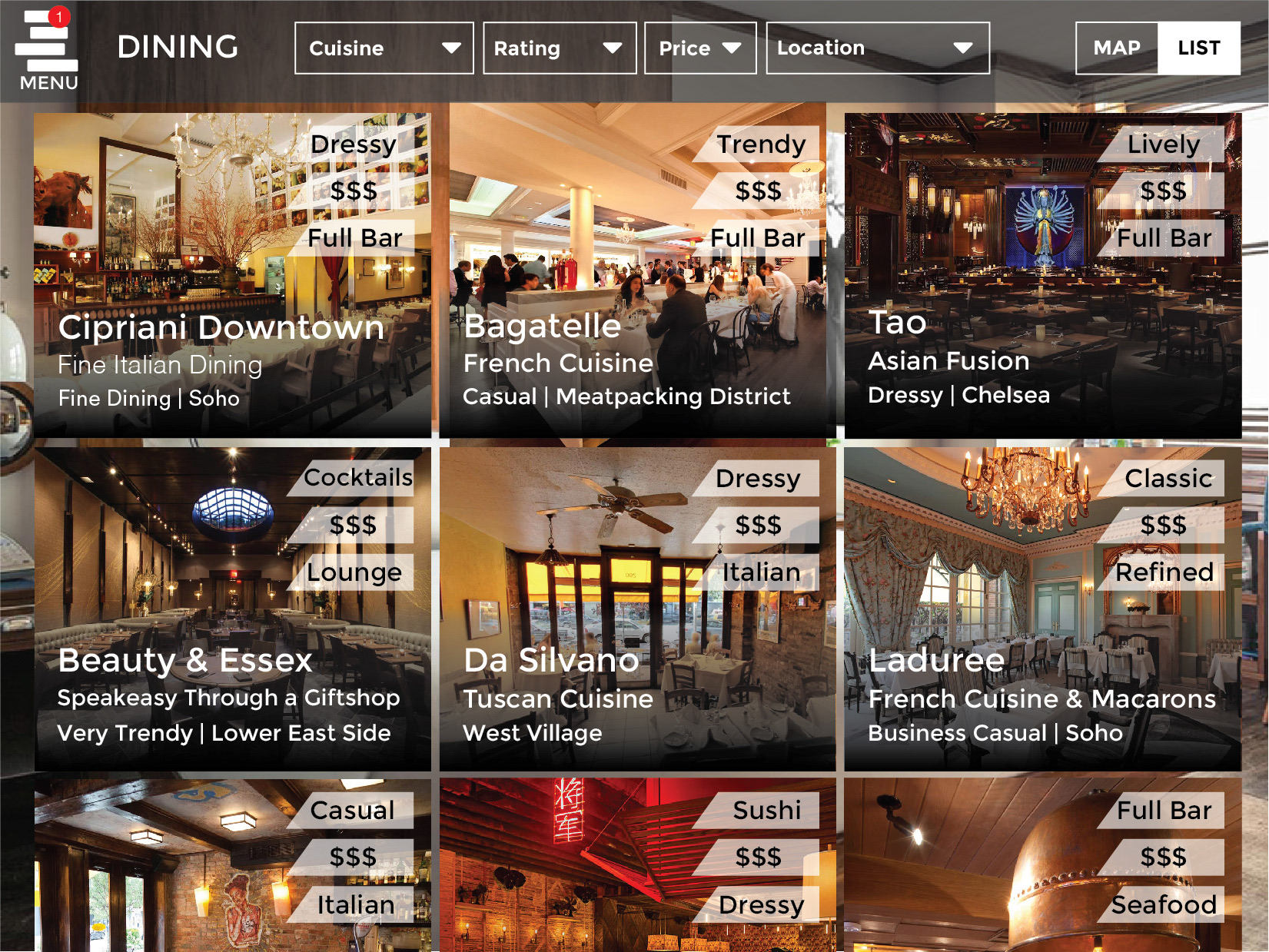
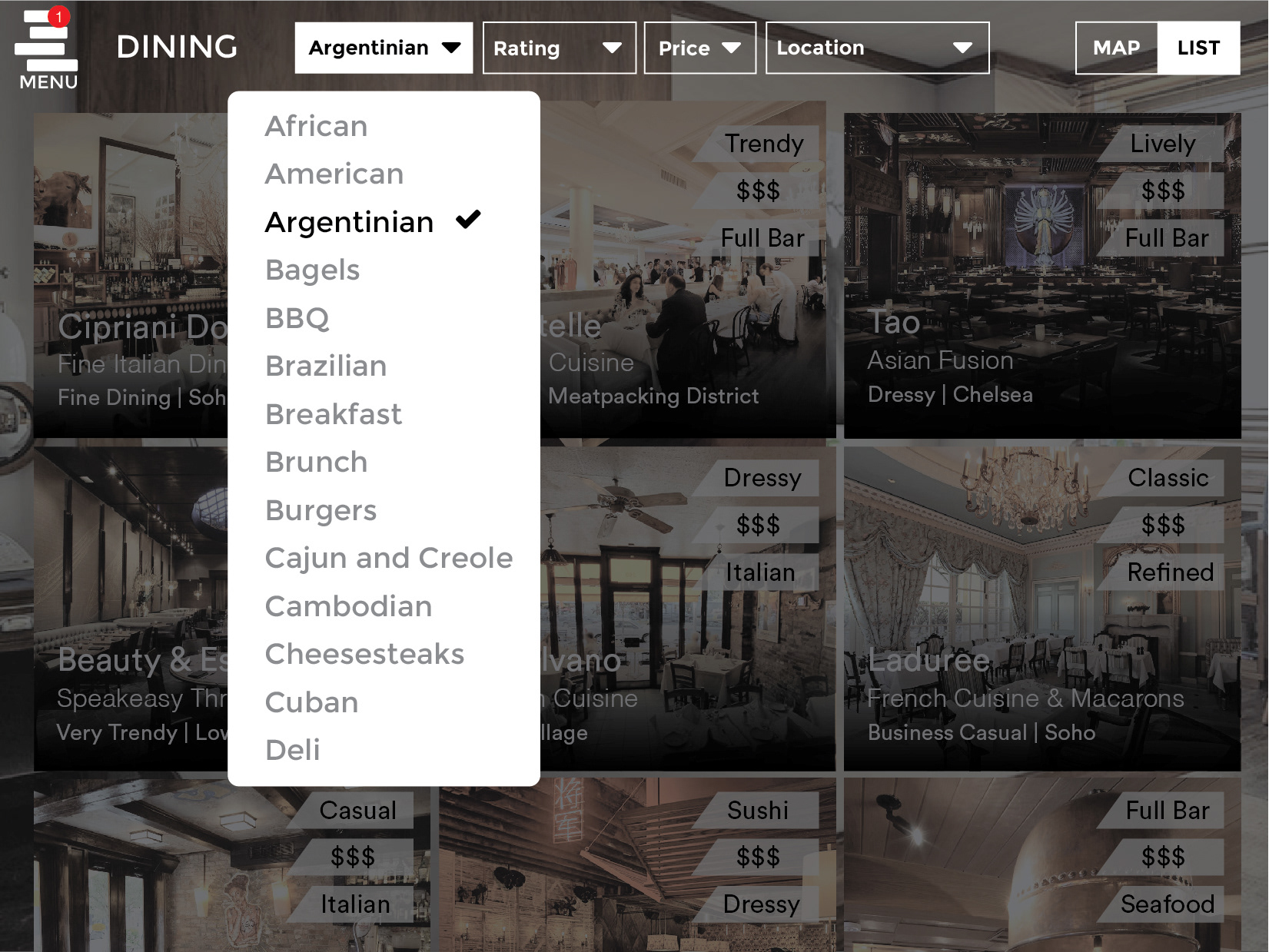
Tablet and phone, light and dark
Why keep PlusMore on the tablet in the room? Guests should be able to use it when they leave. After discussing it with the team, we went with a white and a black design for both phone and tablet: four designs for the same app.
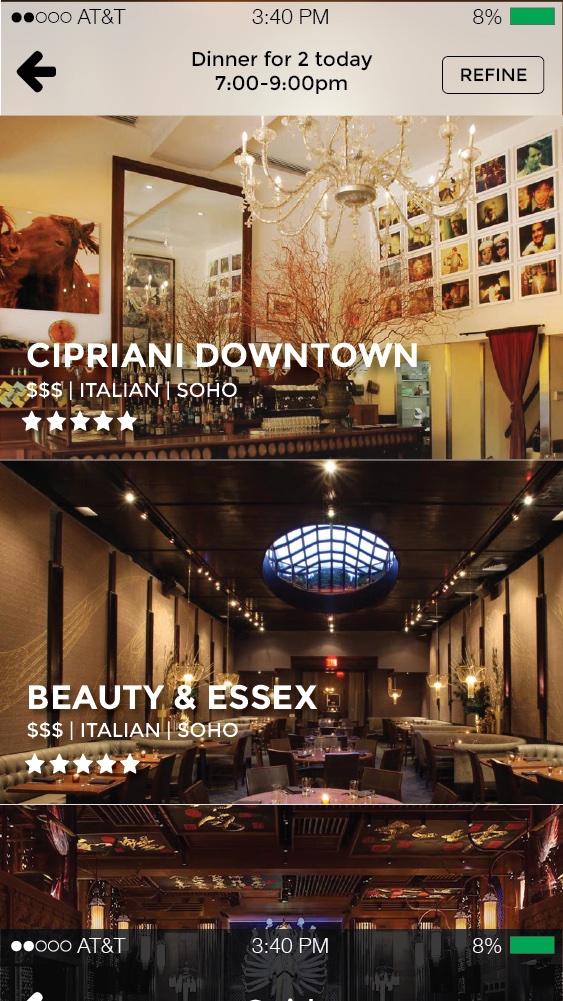
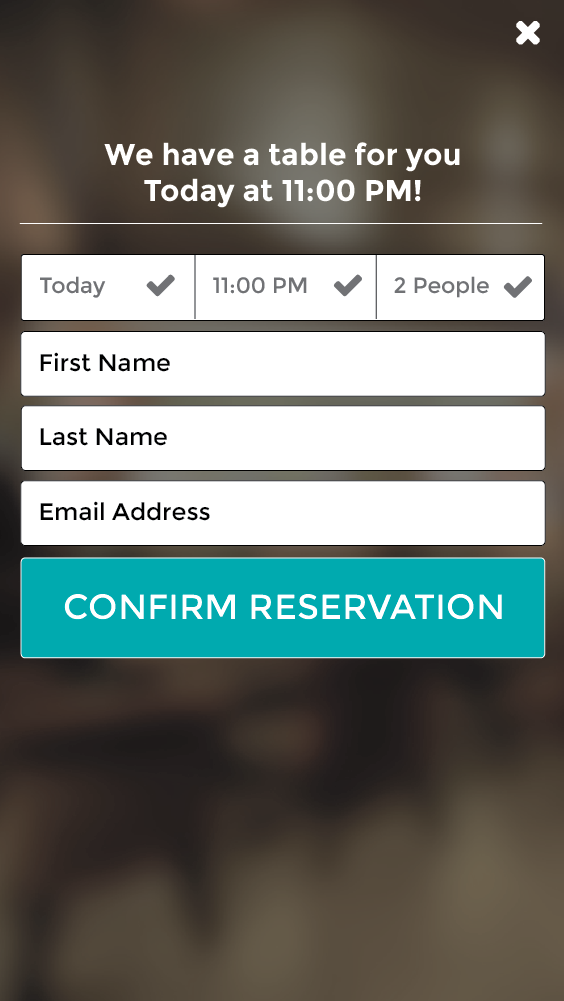
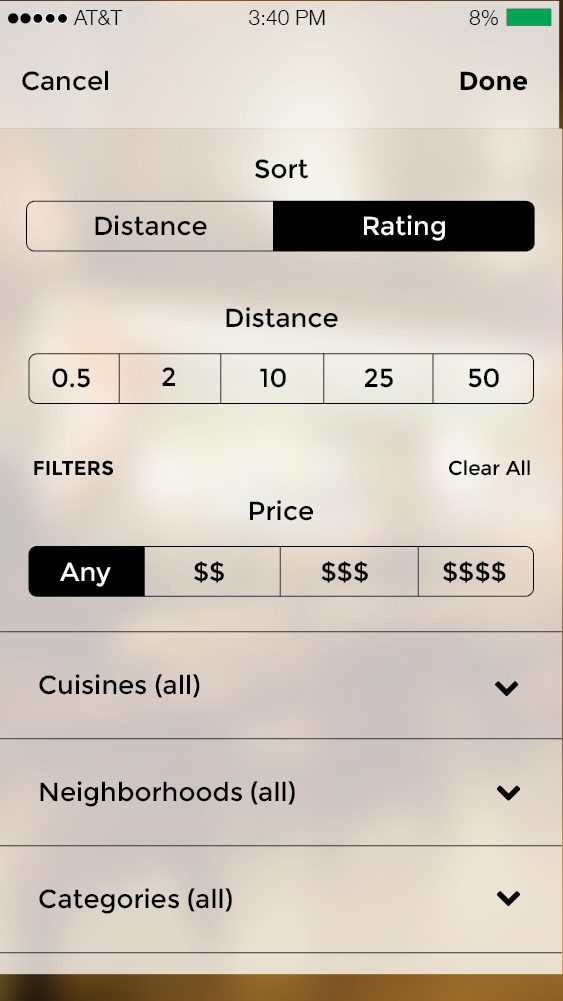
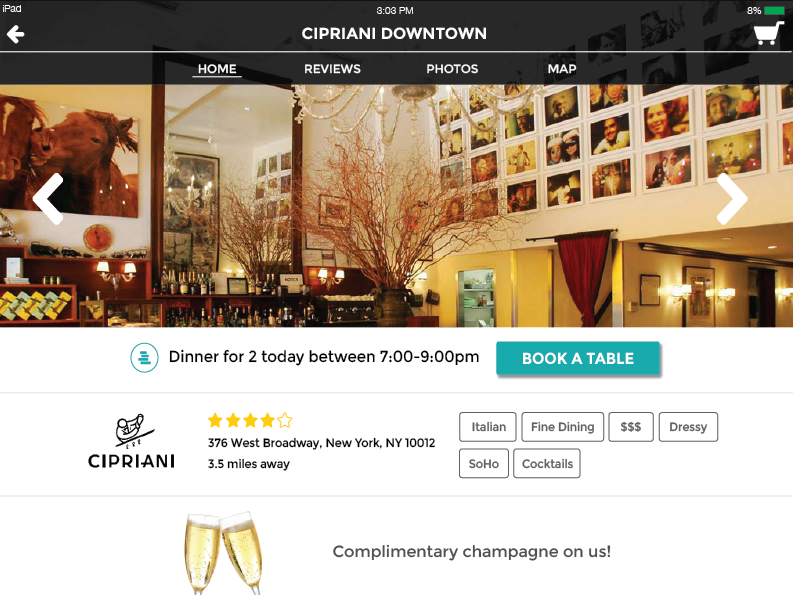
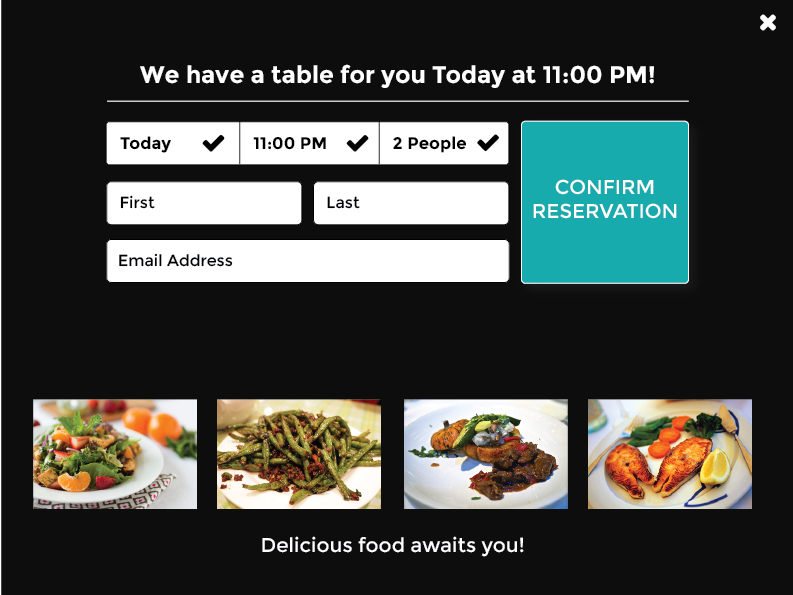
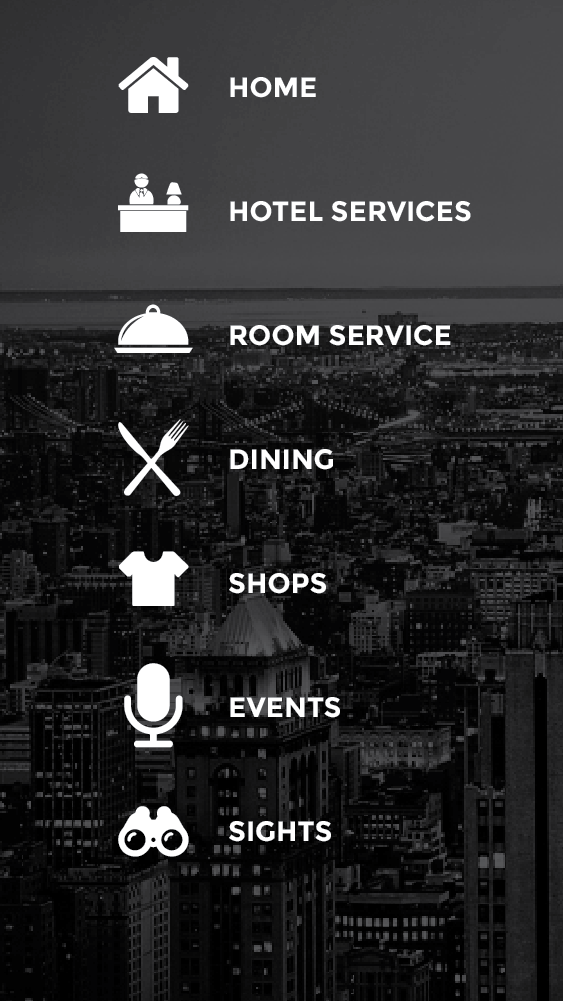
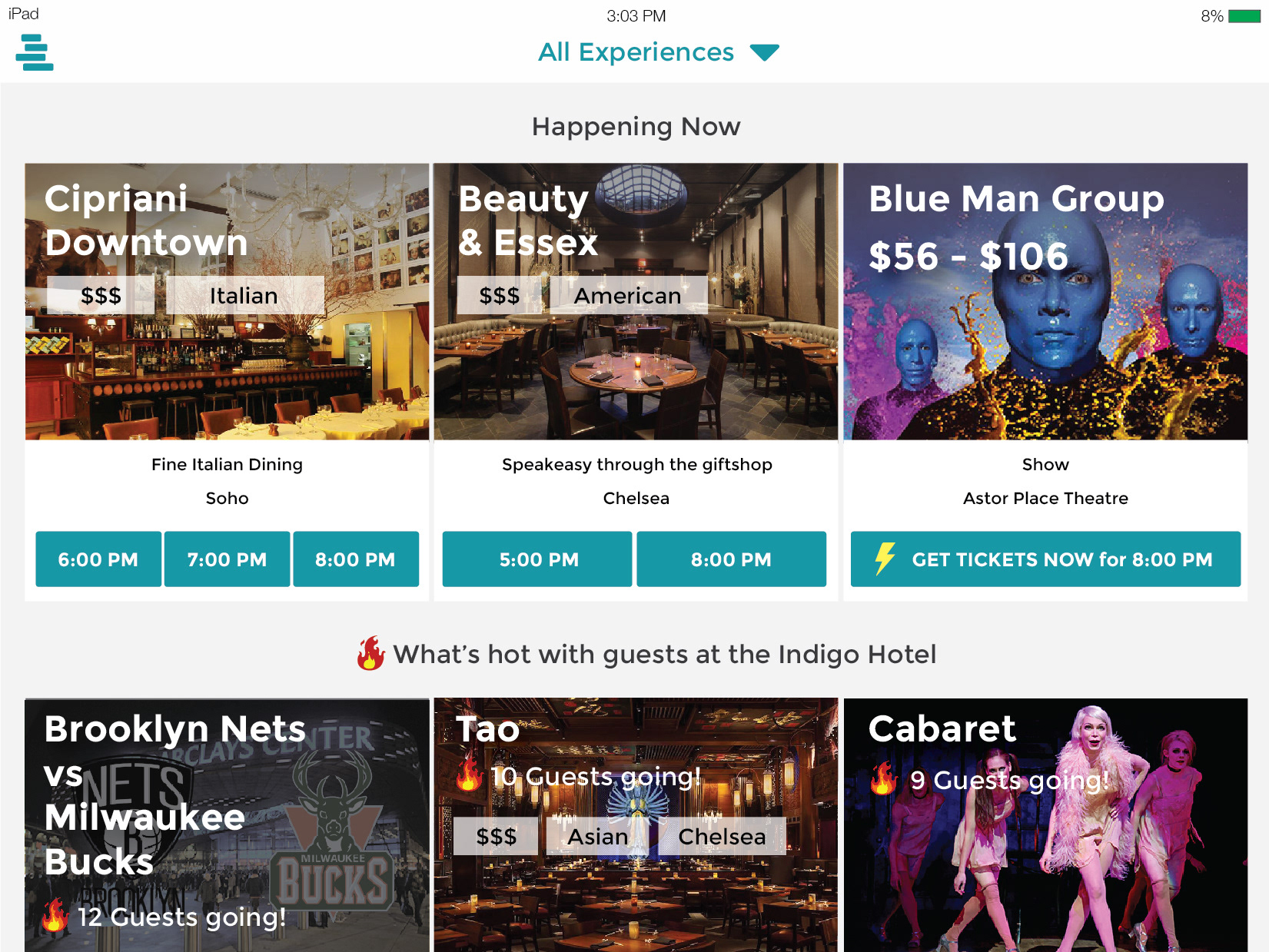
The possibilities felt endless. If a guest was at a conference, they could see its information inside PlusMore, so I designed a full conference section with a schedule.
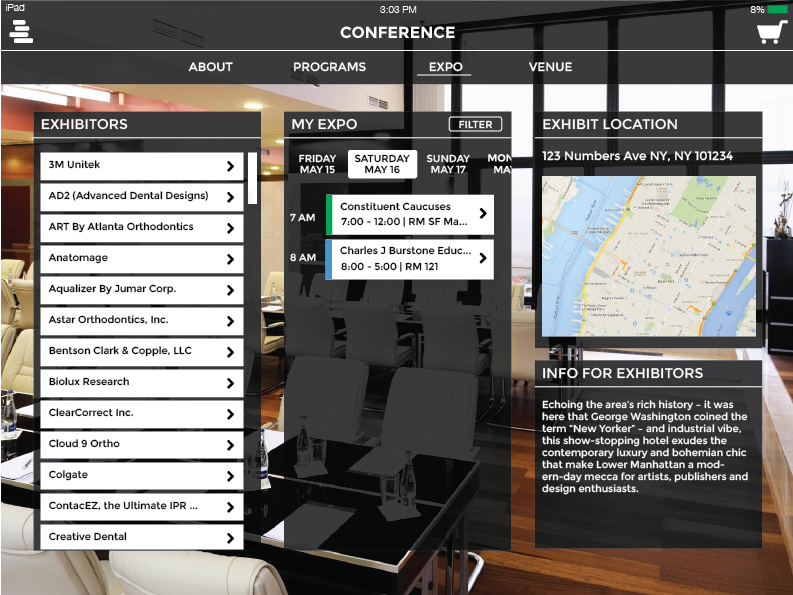
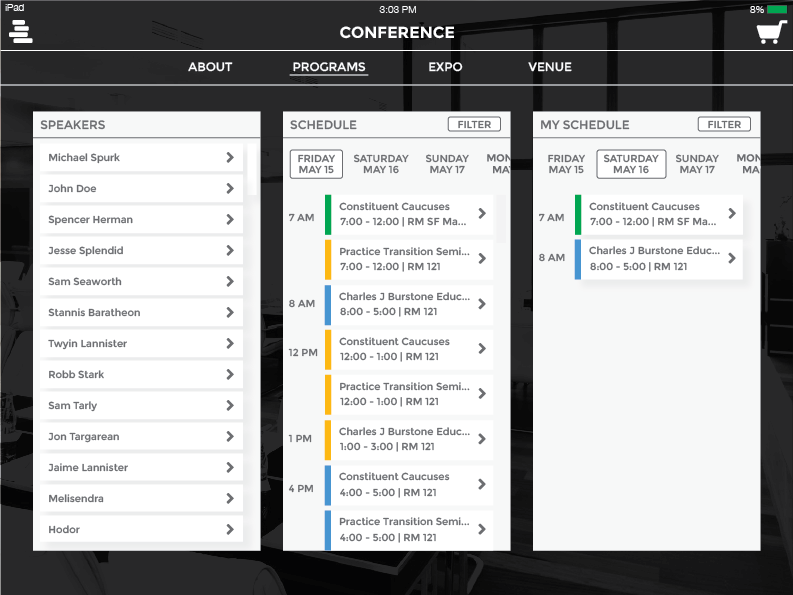
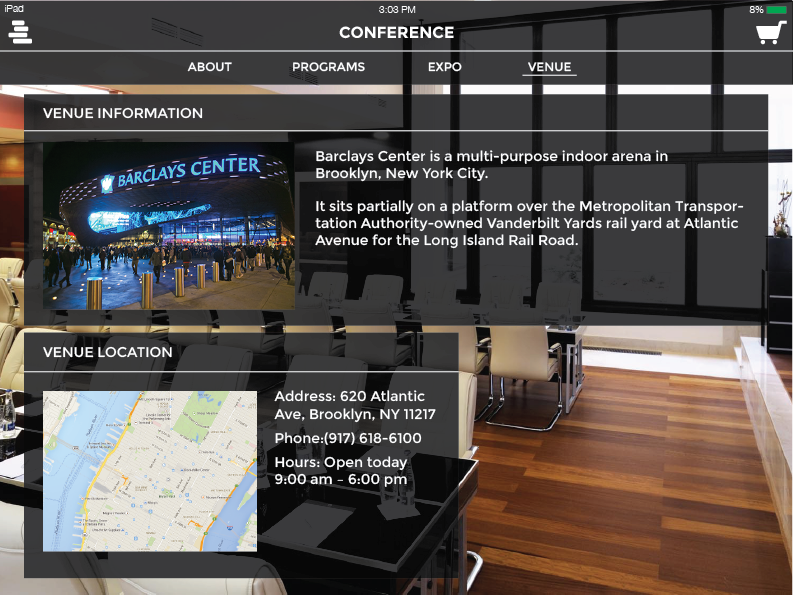
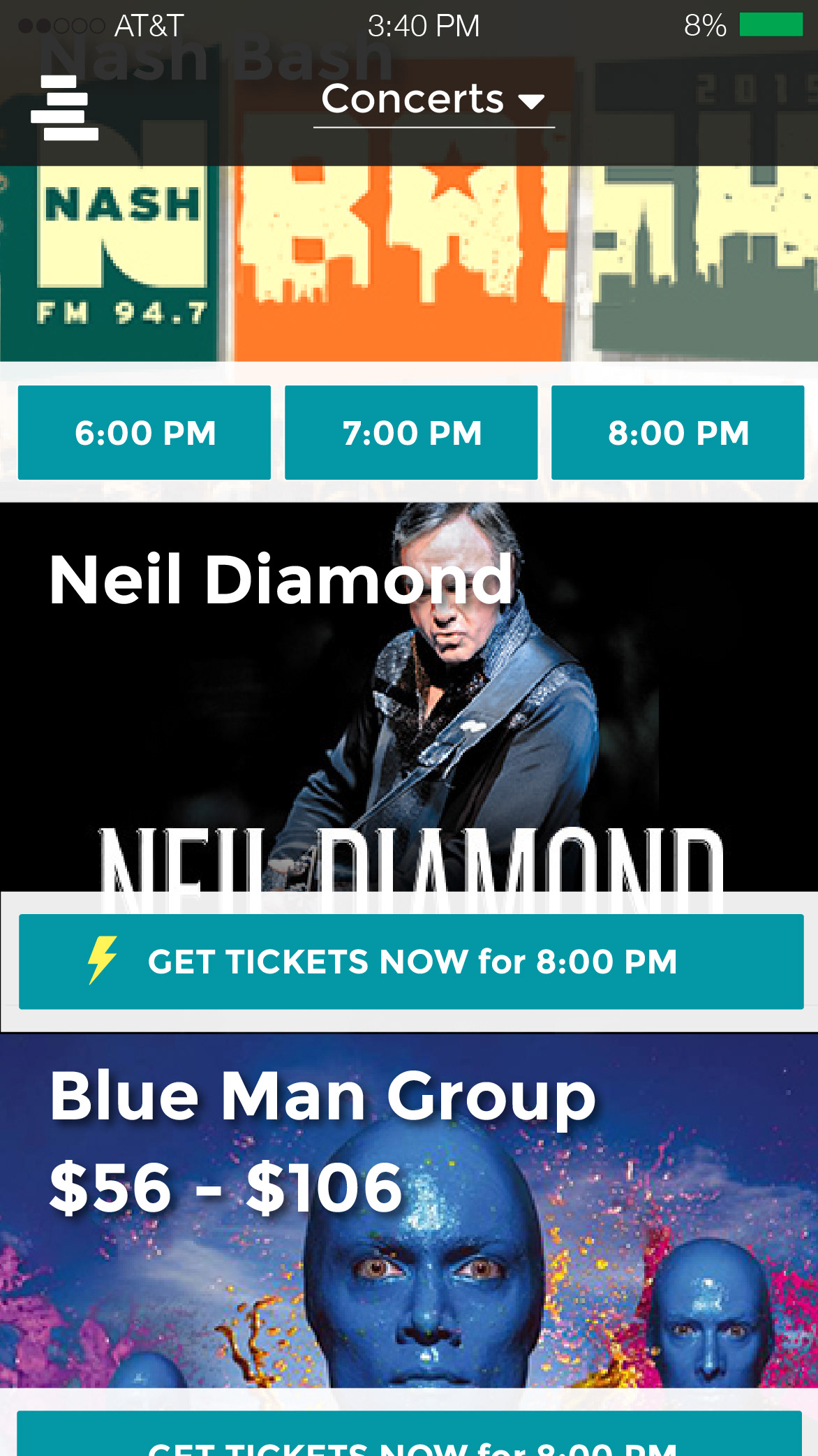
Events got a large call to action with times built in.
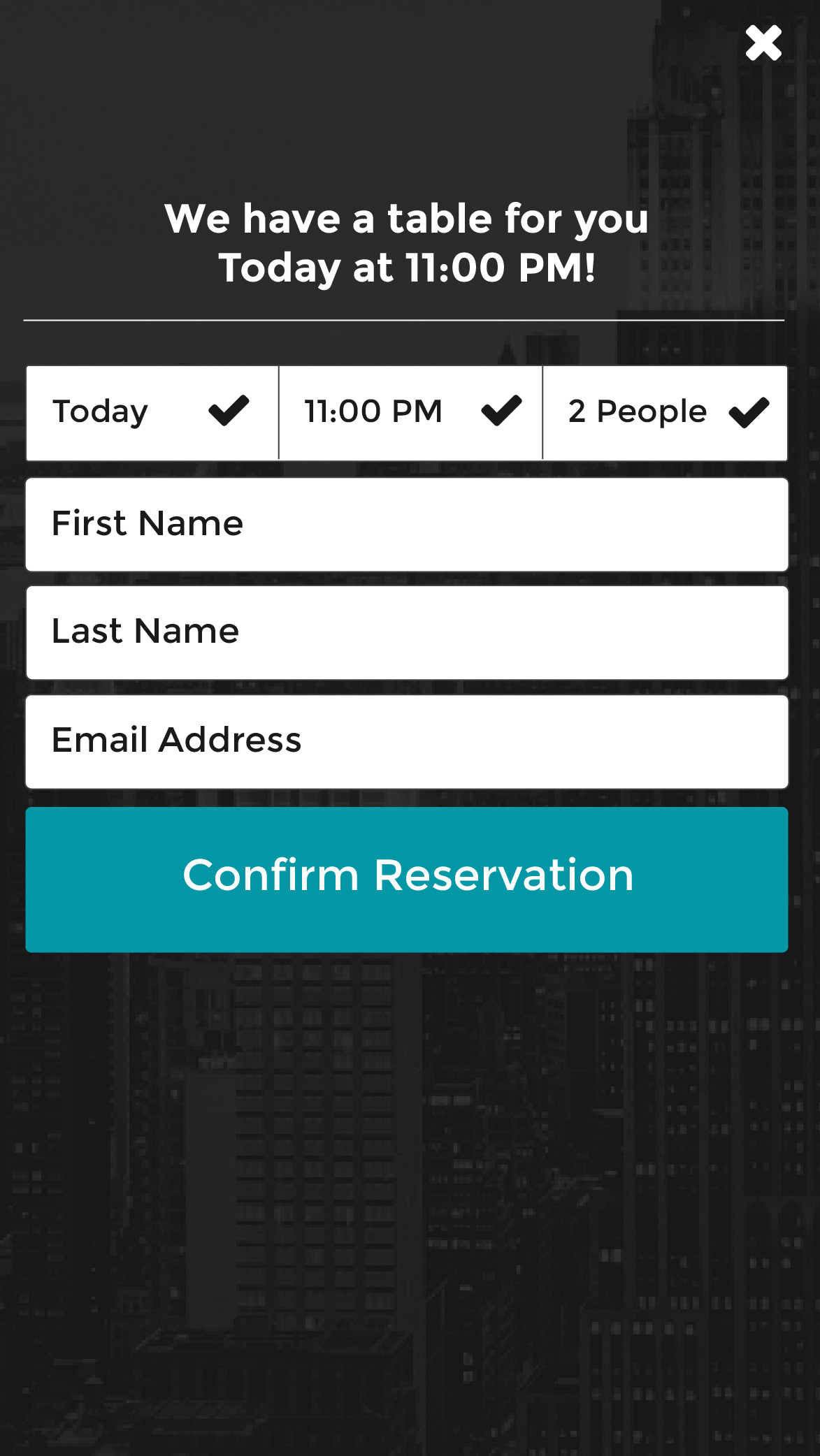
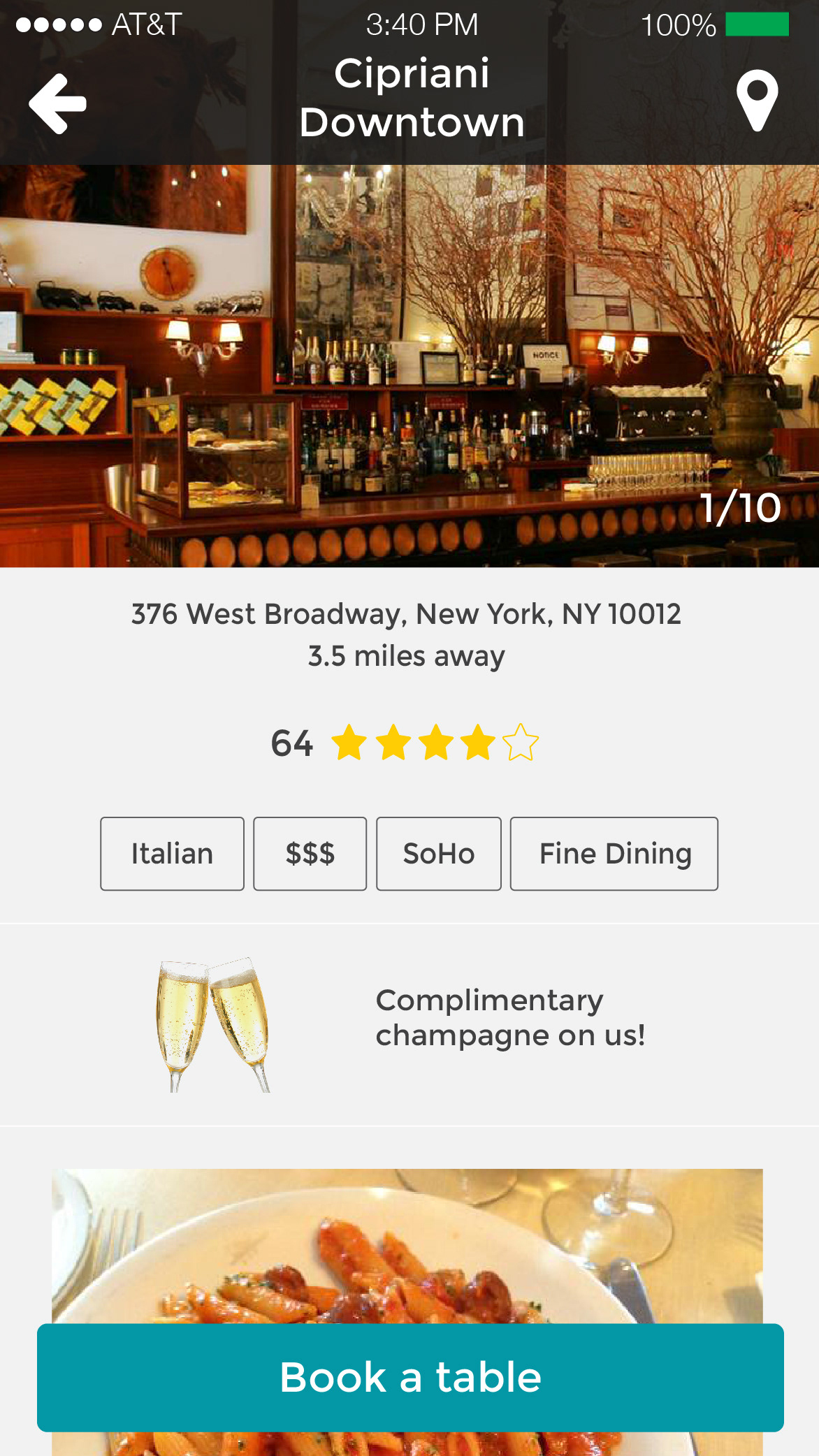
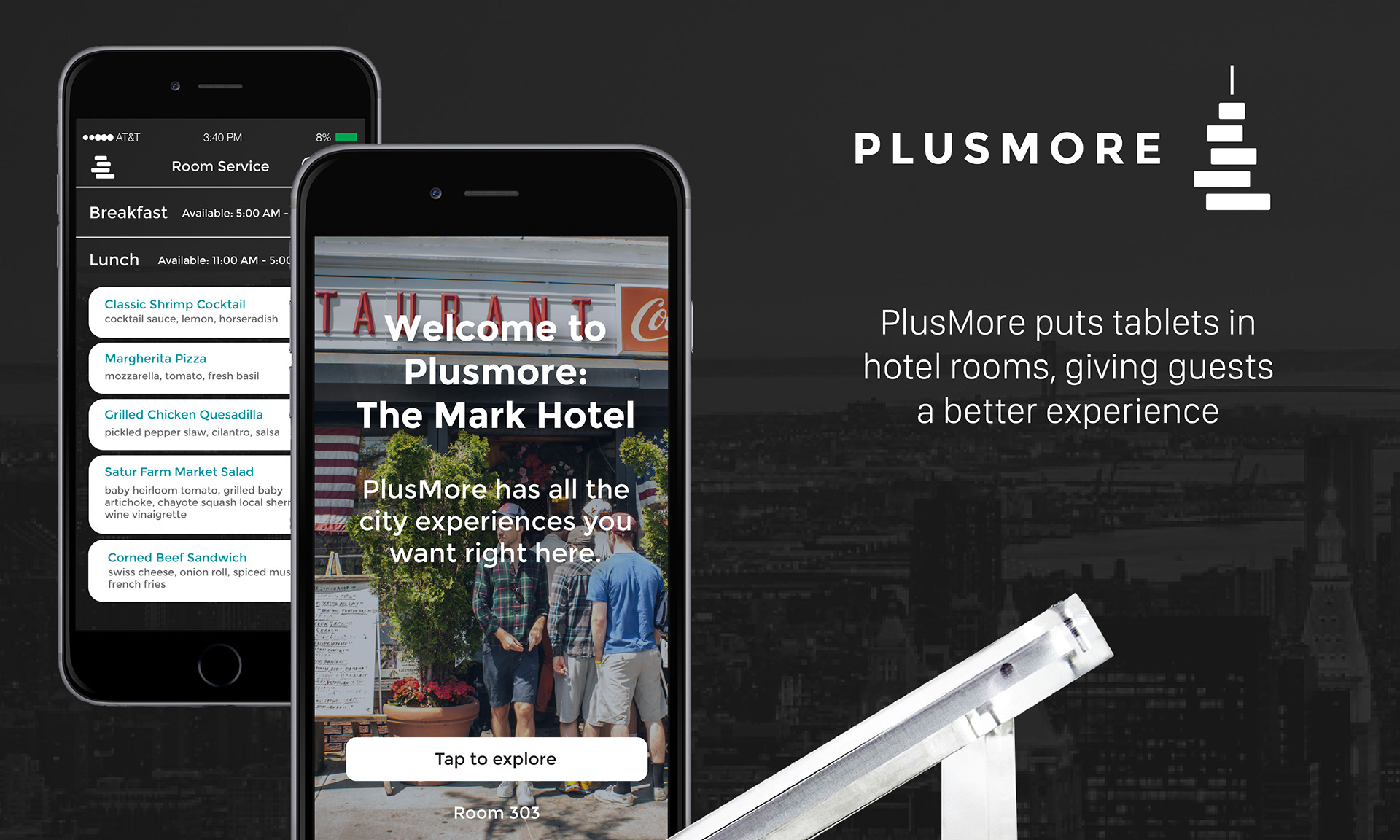
"Welcome to PlusMore" was important to us: we were advertising our own brand, not just the hotel's.
Hotel back end
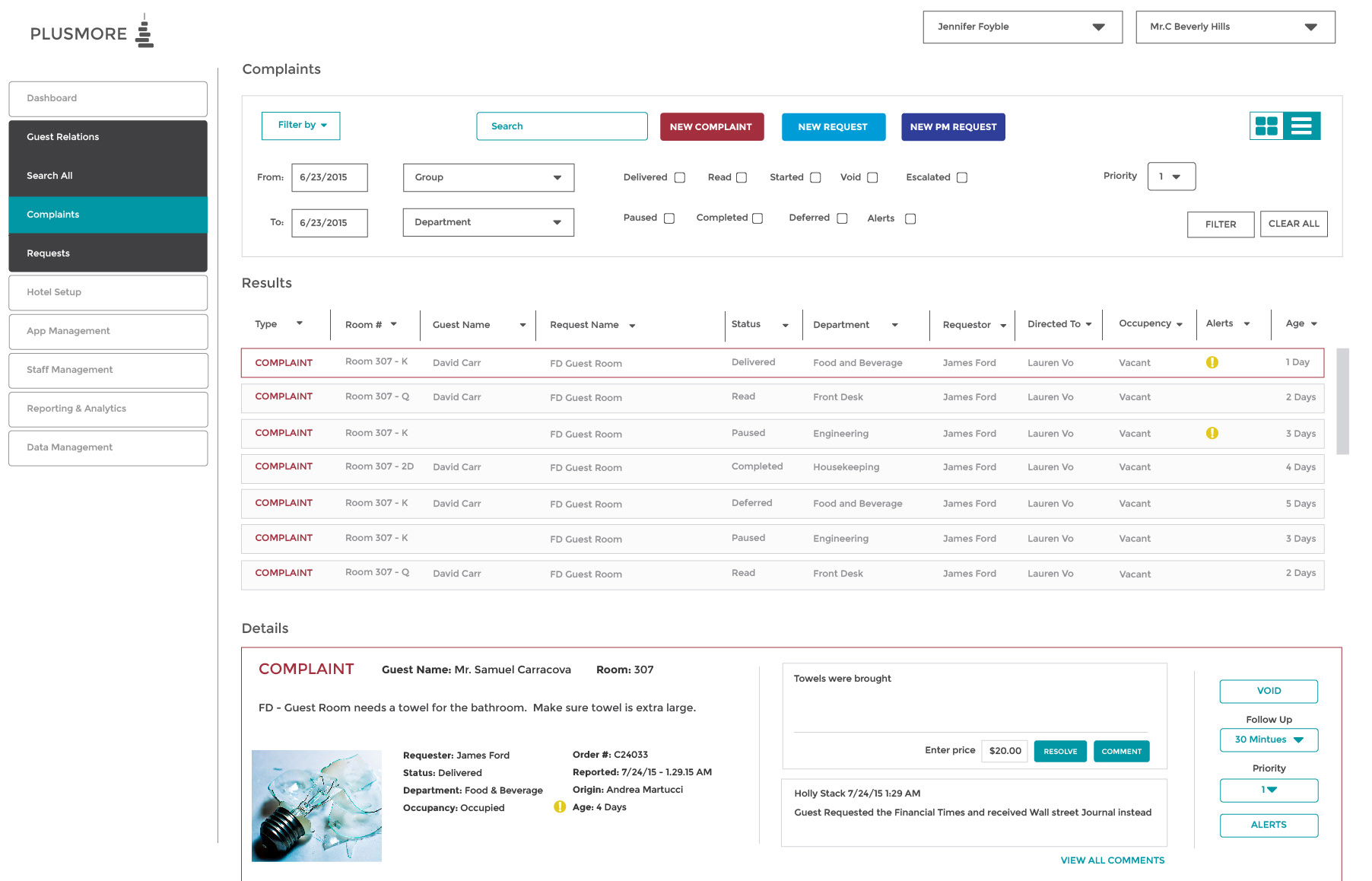
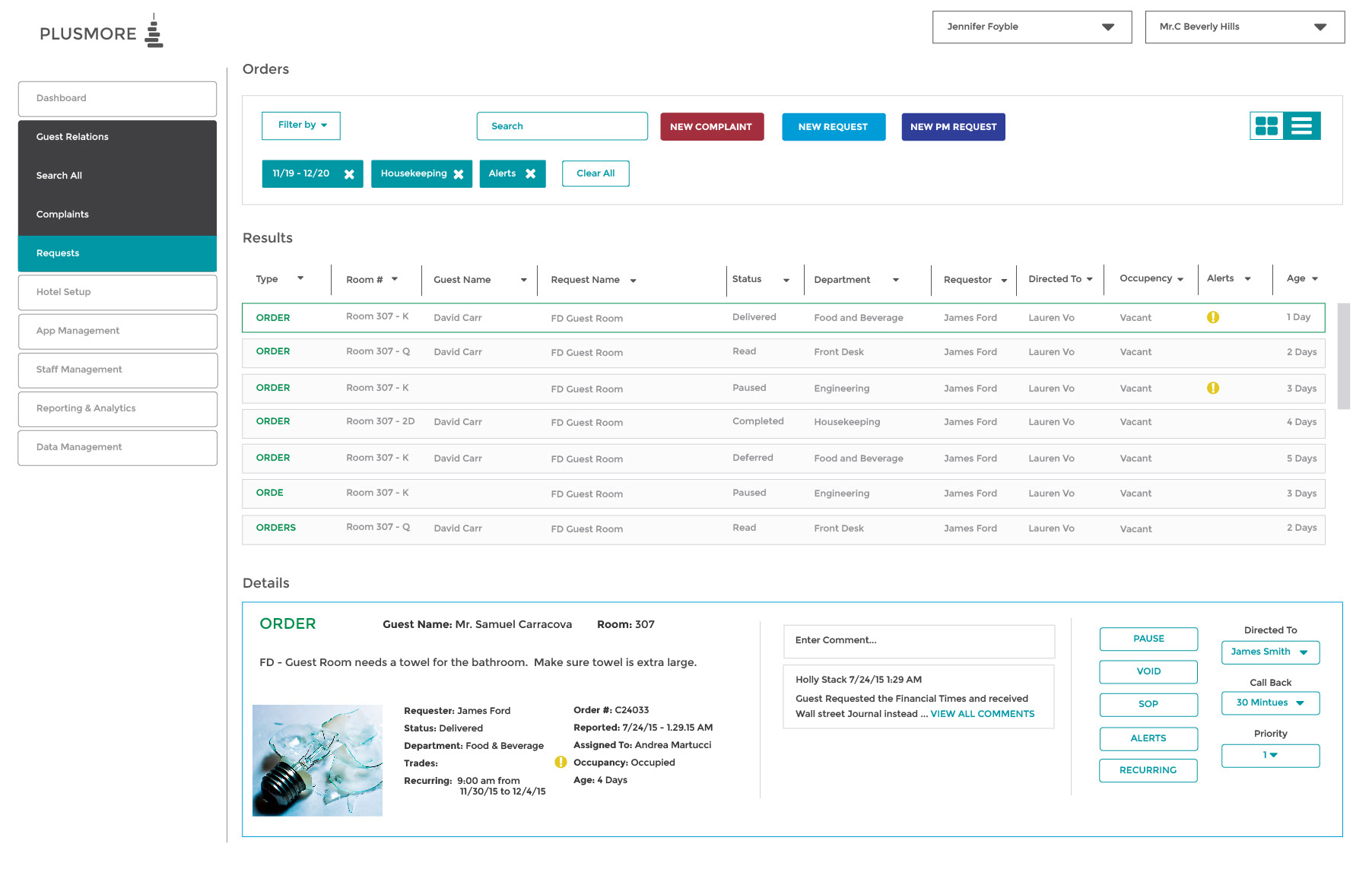
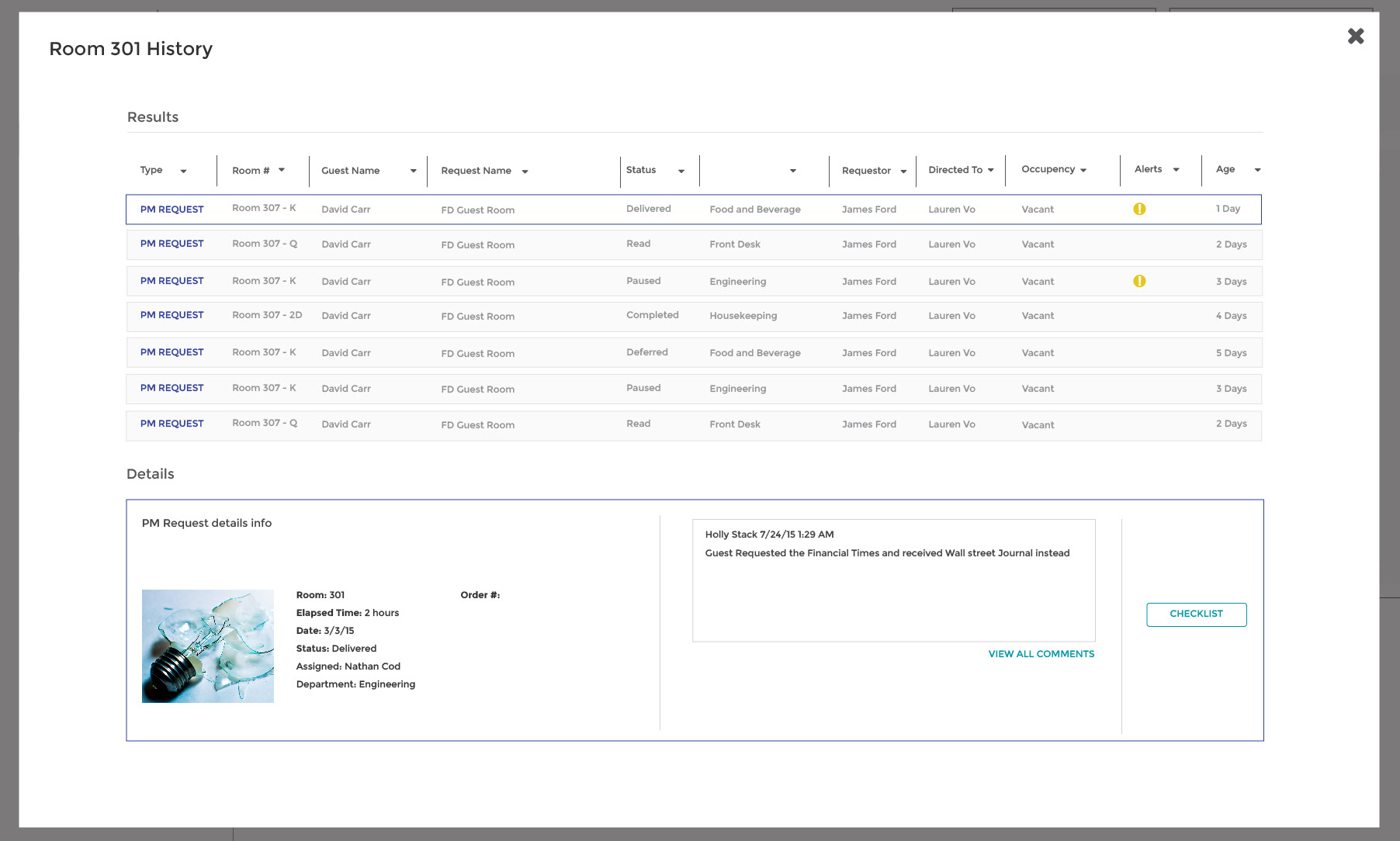
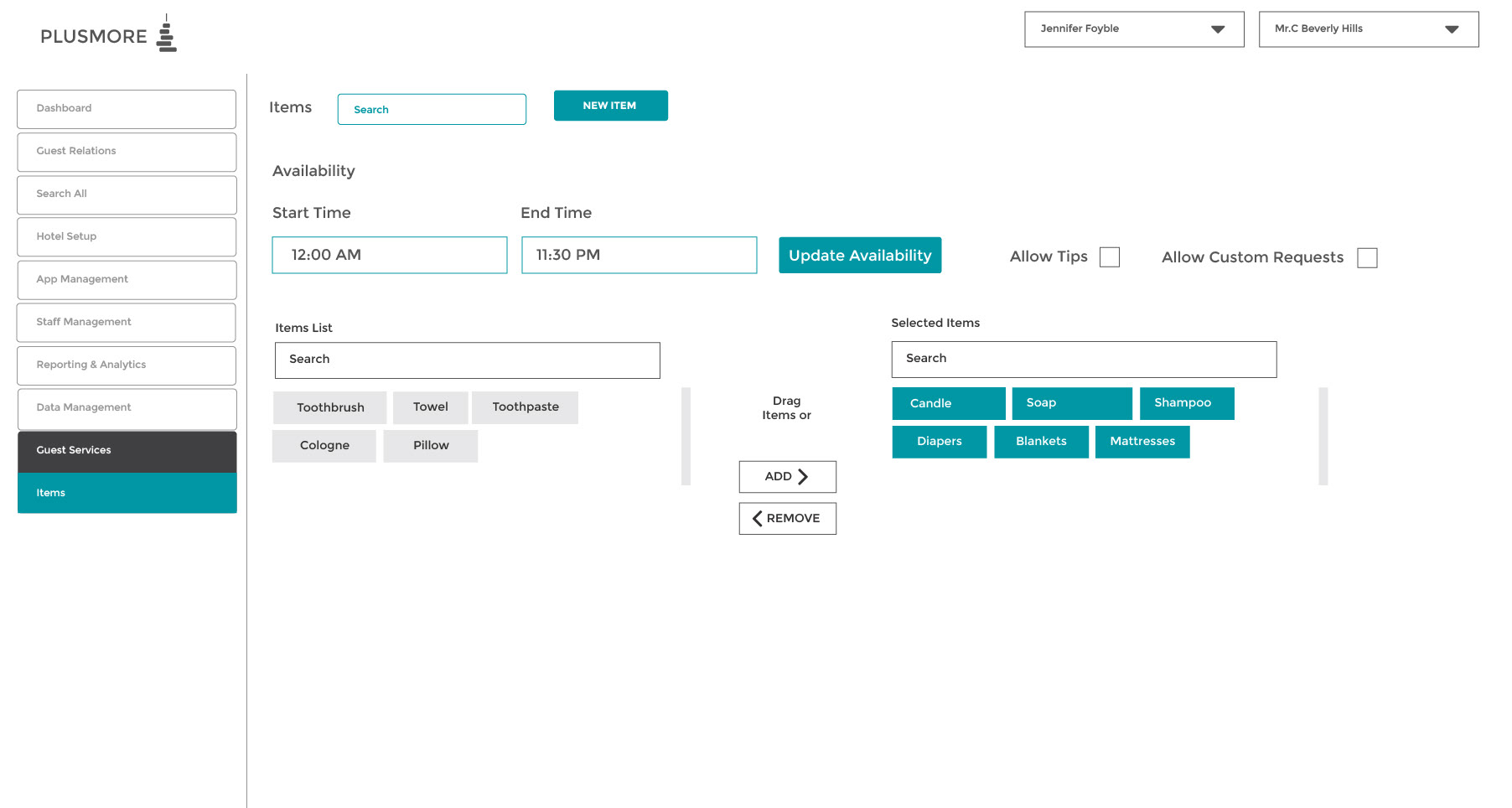
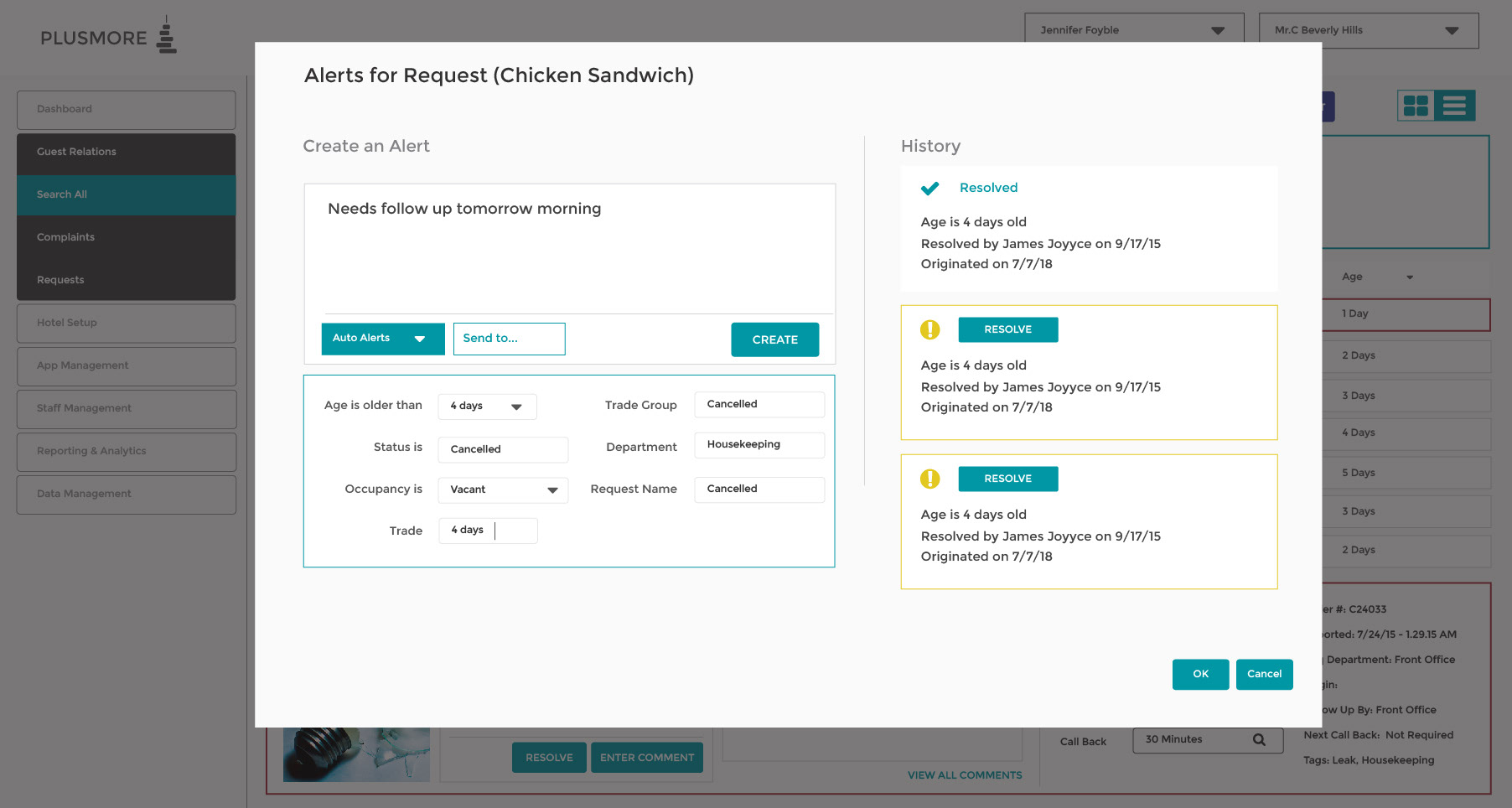
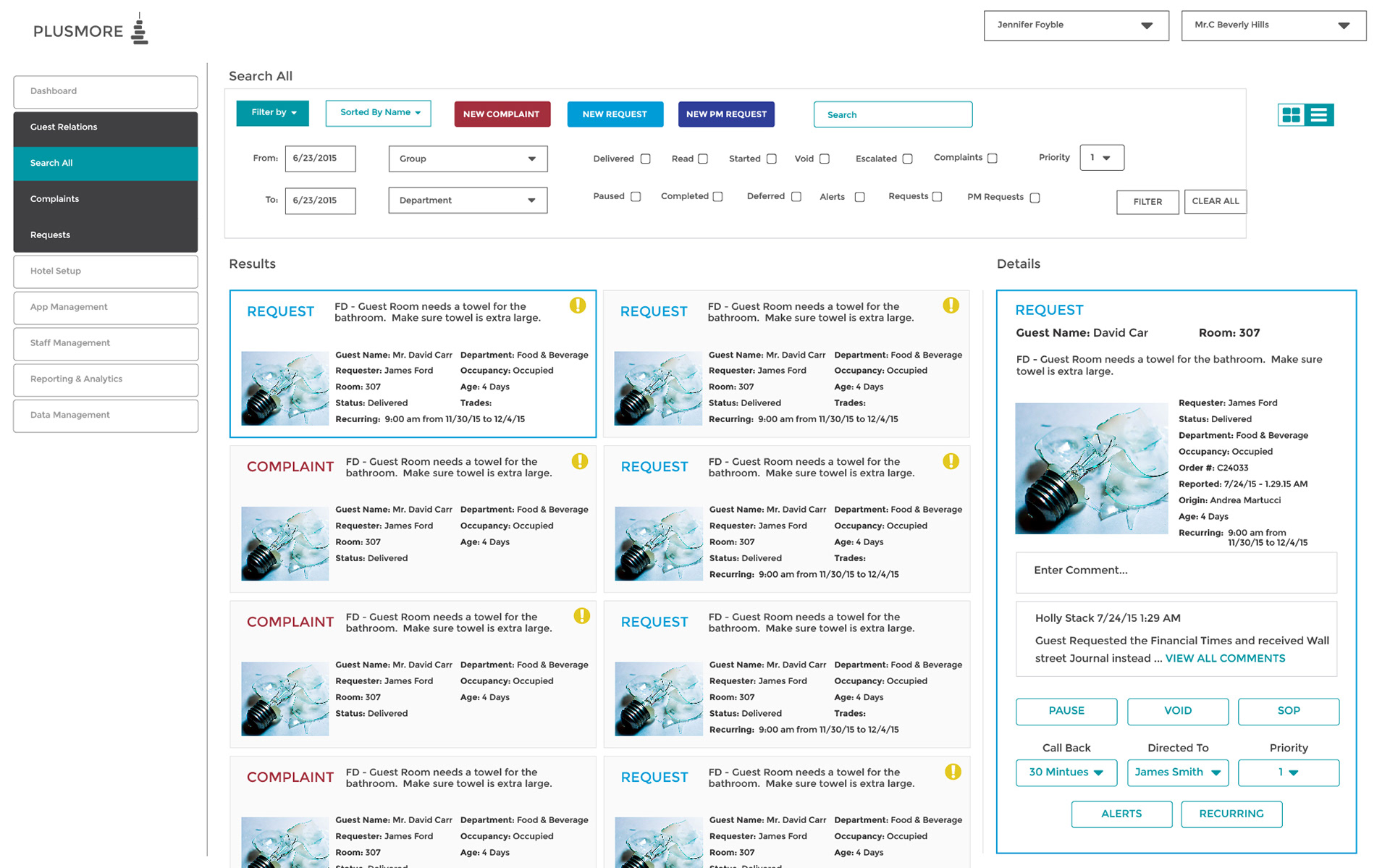
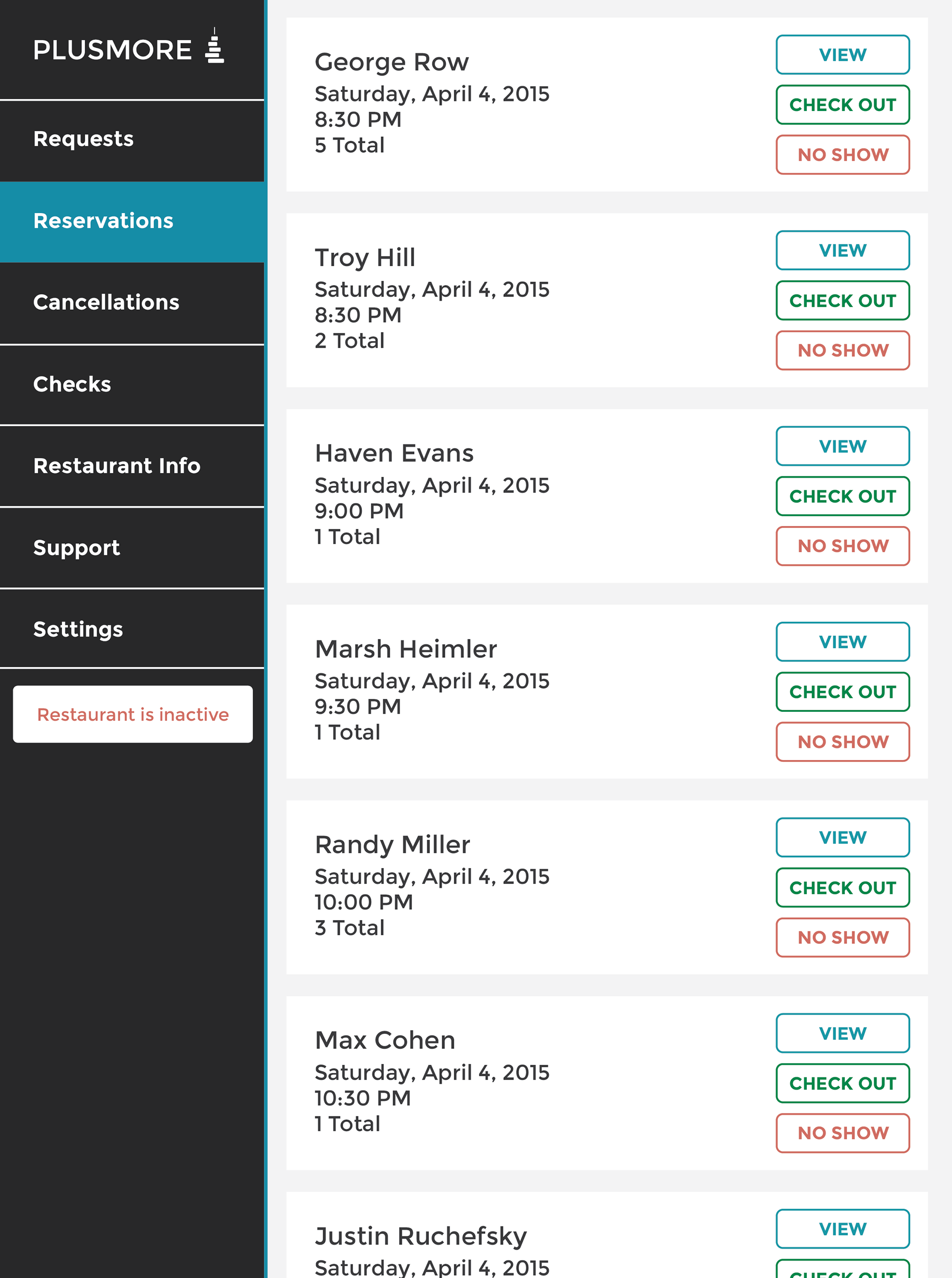
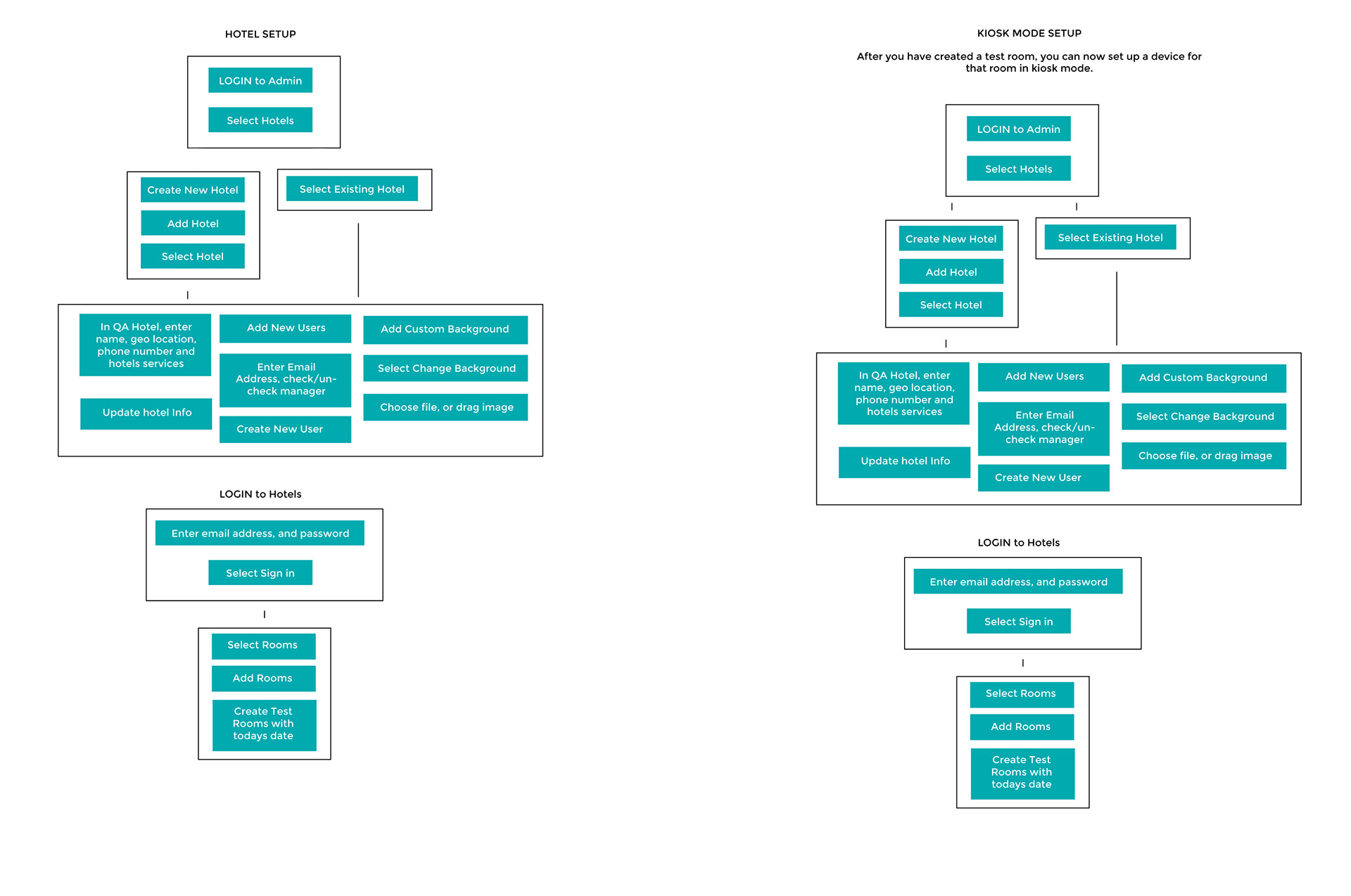
Managers could filter guest messages into complaints (a broken light bulb) and requests (a burger), and see every room and guest behind them. Organizing all that data so it felt seamless was a real task.
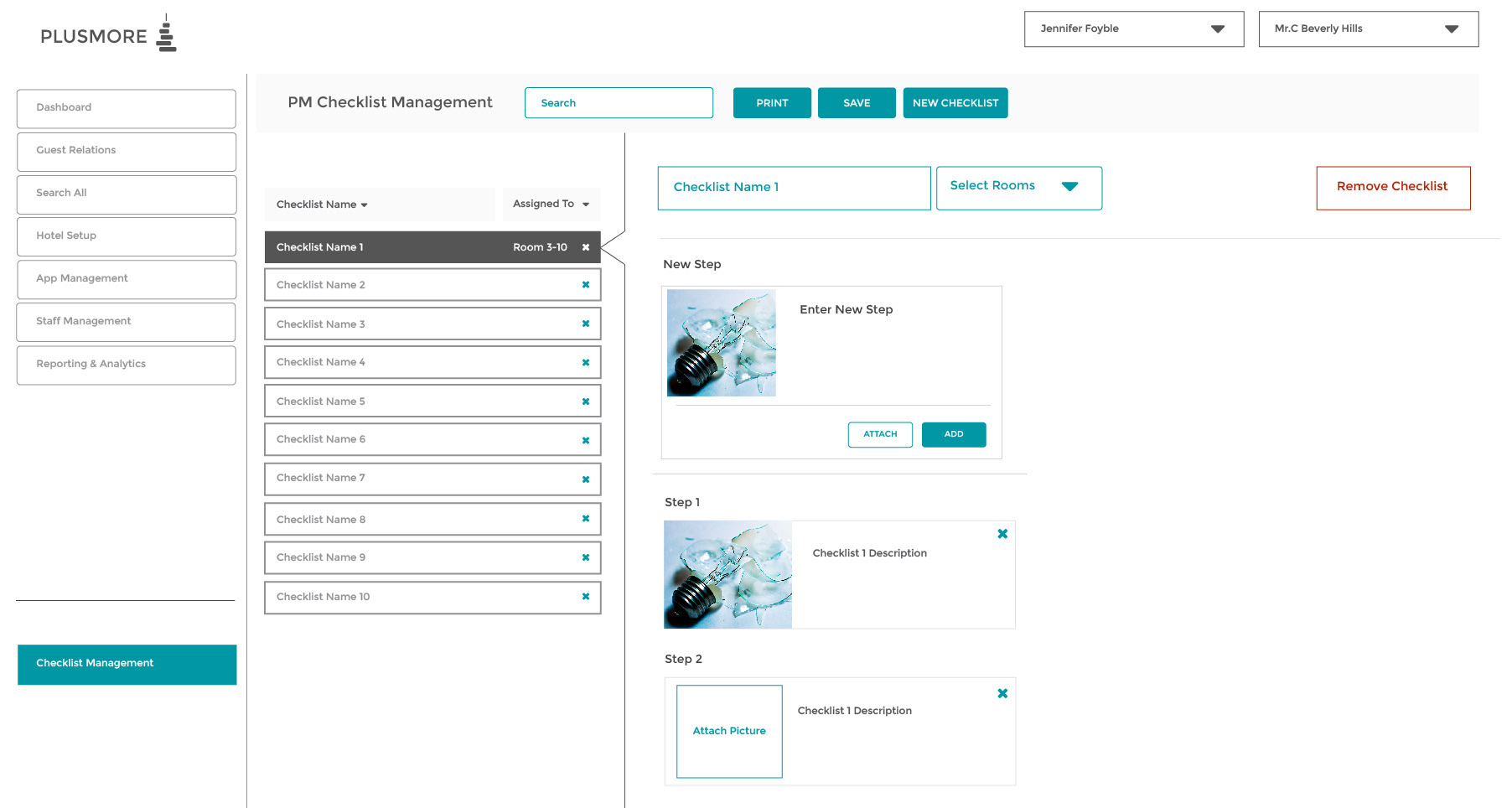
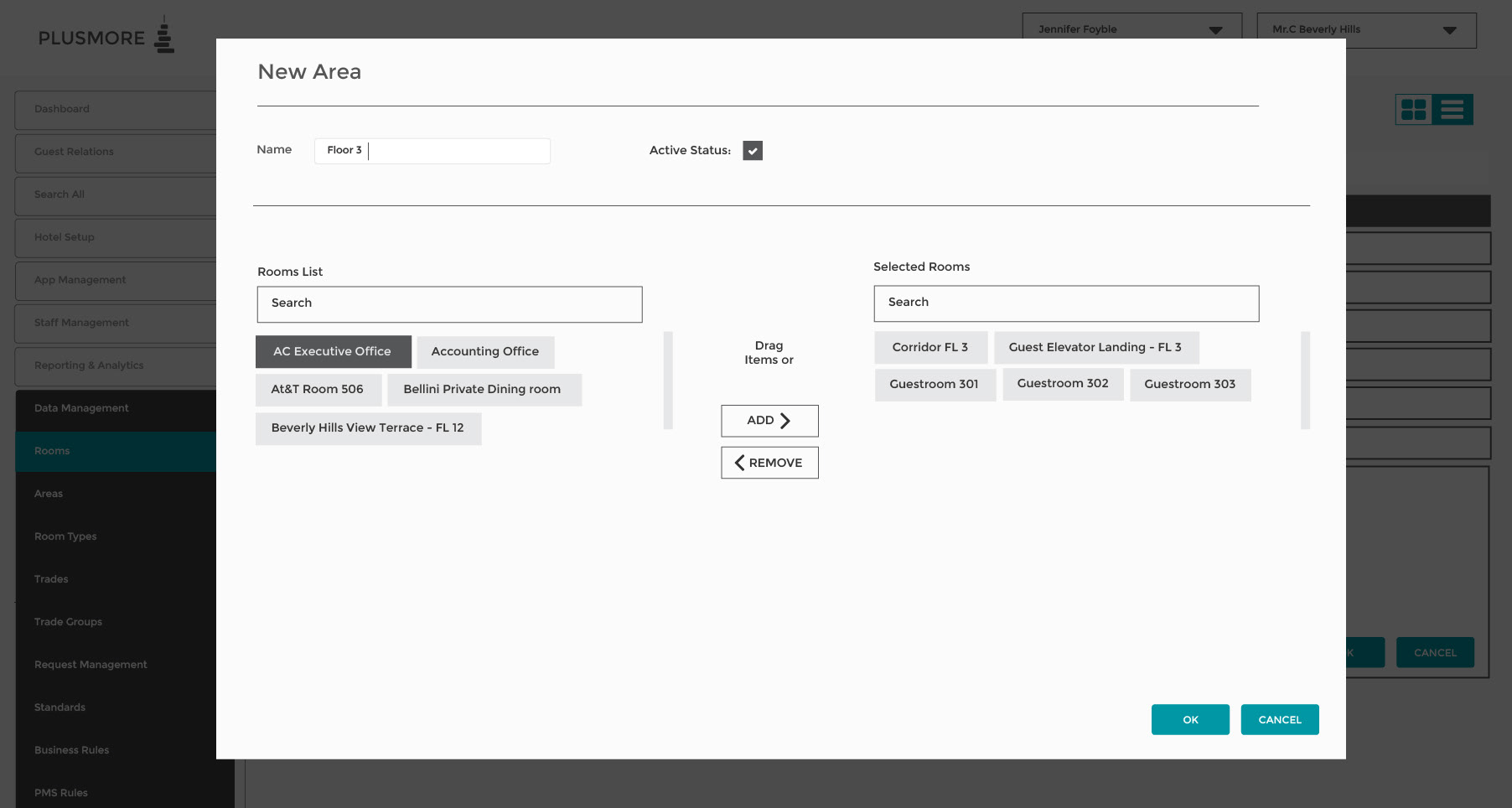
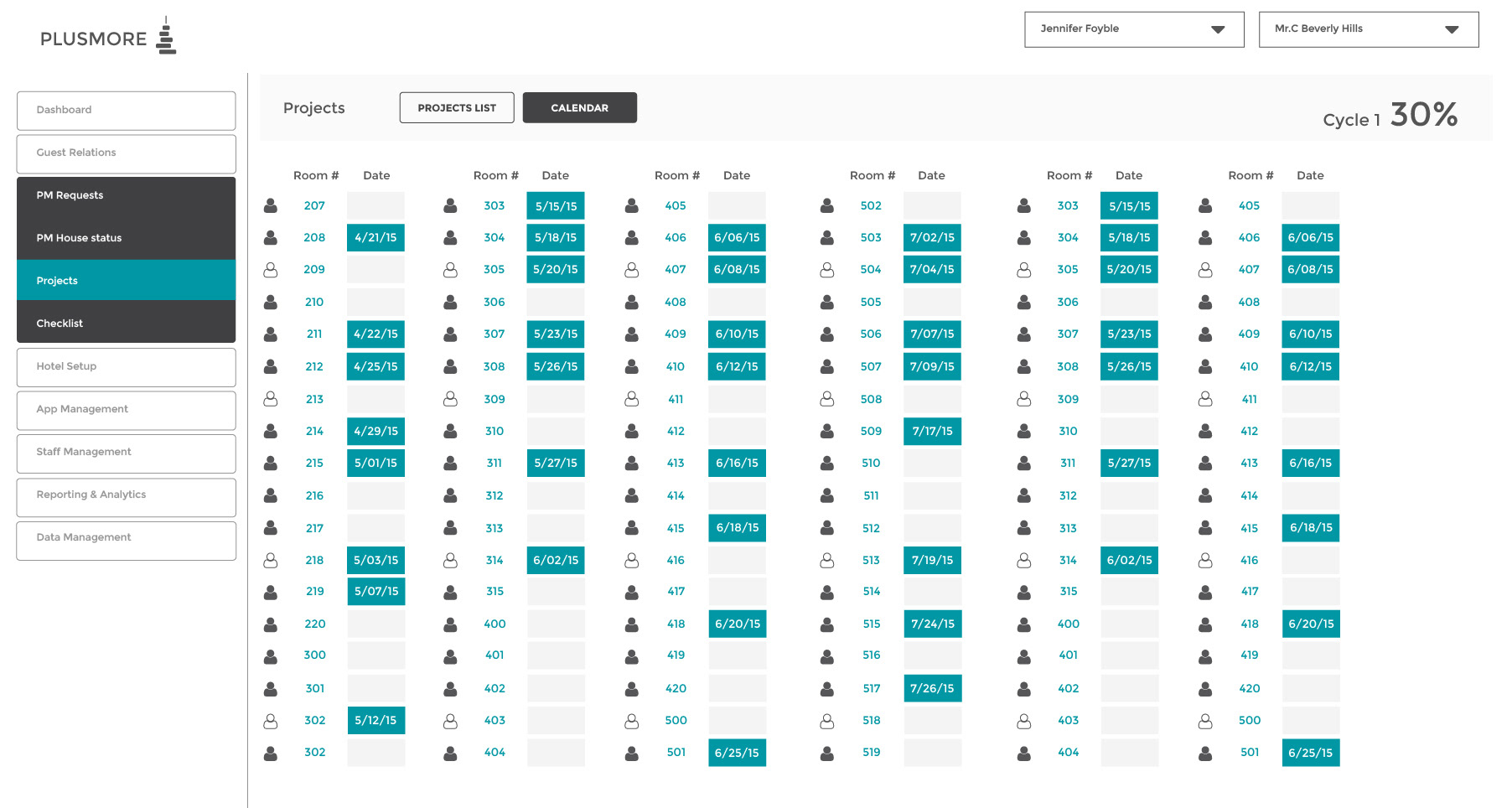
Managers could also view a room's history and leave comments, add new rooms with New Area, and see which rooms housekeeping had made ready that day: grey for unoccupied, green for ready.
What I learned
PlusMore was always changing, and one new idea could reshape the whole product. Mockups of real screens turned out to be a much more effective way to share ideas with my teammates than documents.
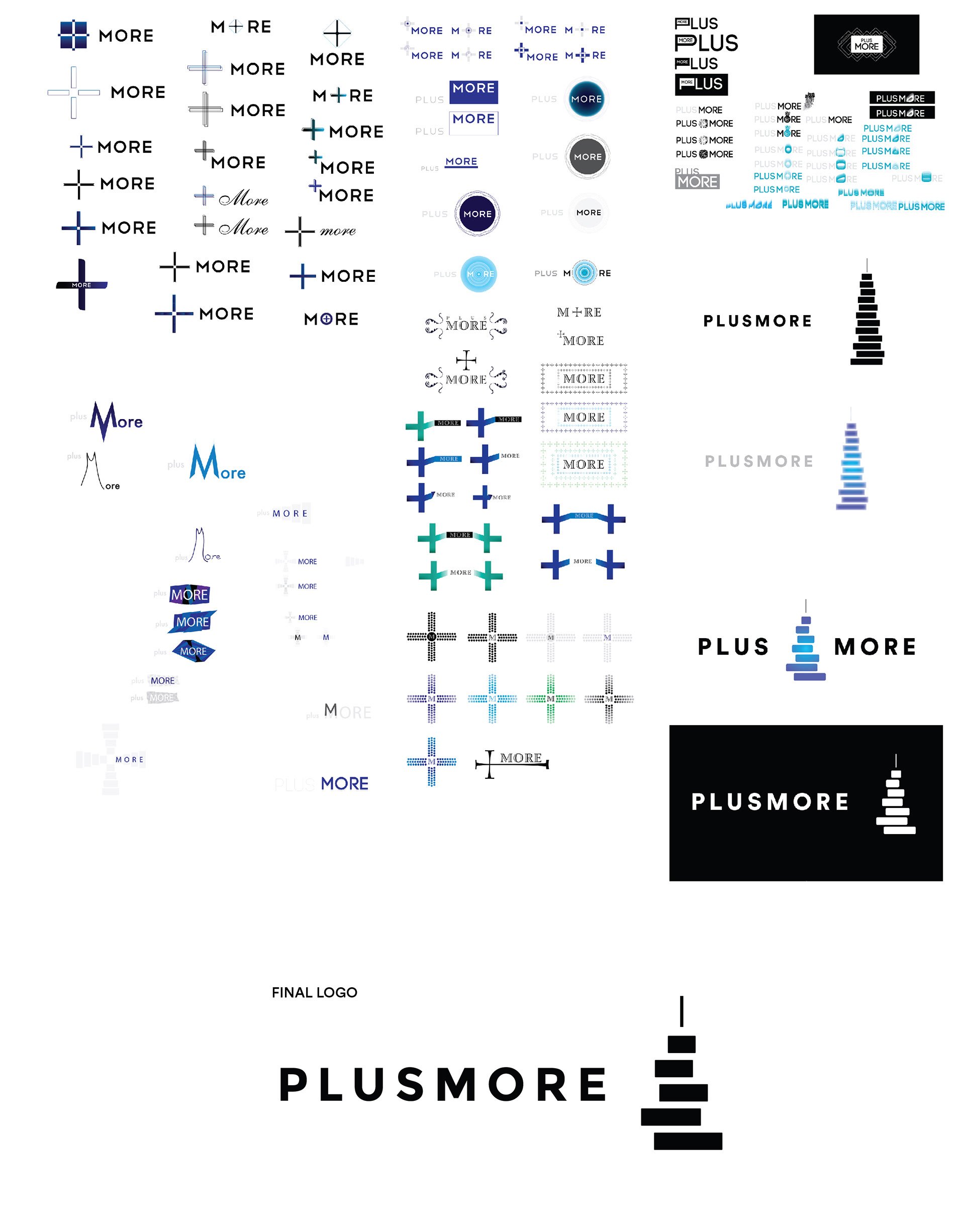
Brand
Doing a logo right takes months. As you learn what your startup is, its identity adapts with it. A good designer anticipates where the company might go, so the logo doesn't box in its future.